Leadership and Organizational Development
Social Current Book Report: Must-Read Titles on Workplace Retention
 Social Current
Workforce retention is one of the Social Current network’s most often reported concerns, and recent sector-wide reports illuminate the reality. The sector’s turnover rate is approximately 19%, significantly higher than the 12% seen in the private sector, and one in three nonprofits report struggling with retention and turnover. Year after year, staffing remains a concern, with nearly two-thirds of nonprofit leaders reporting difficulty filling vacancies, and more than half saying their biggest staffing challenges stem from insufficient funding to recruit, retain, and support their staff.
The reasons nonprofit employees cite for leaving have remained consistent over the years and include too much work and too little support, limited growth opportunities, unsupportive management, and inadequate pay and benefits. When experienced staff walk out the door, their institutional knowledge, community relationships, and the hard-won trust of people and communities are often lost or harmed.
To help support, retain, and engage your team, Social Current’s Knowledge and Insights Center (KIC) recommends these resources. Log in to the KIC to gain insights from:
- Business Books Summaries: Featuring book briefs that convey key concepts in 10 pages or less
- Learning Community Courses: Interactive, self-paced courses to develop essential skills
Staff at Social Current Impact Partners and organizations that have achieved private, Canadian, and public COA Accreditation should log in to access these resources. KIC access can be purchased individually or as a benefit of an Impact Partnership or COA Accreditation.
Business Book Summaries
The Retention Revolution: 7 Surprising (and Very Human!) Ways to Keep Employees Connected to Your Company
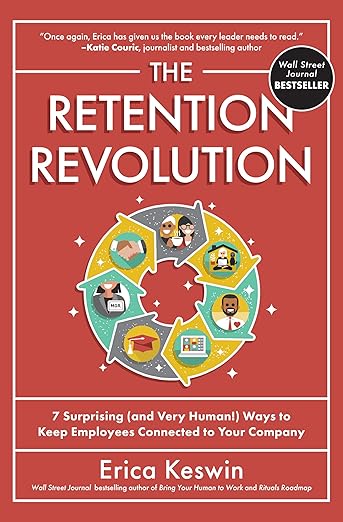
The Retention Revolution by Erica Keswin challenges leaders to rethink workforce dynamics by replacing outdated management assumptions with human-centered approaches. Keswin argues that today’s workforce functions less like a static talent pool and more like a flowing river where people come, go, and return. The book offers seven practical shifts, emphasizing authentic relationships, flexibility, autonomy, and personal development as drivers of organizational success. Packed with real-world case studies, it provides social sector employers with an actionable roadmap for deepening employee connection over the full arc of a career, making it an essential read for any leader focused on reducing turnover.
Access the business book summary.
HBR Guide to Retaining Your Best People
This practical, expert-driven resource is a must-read for leaders navigating today’s competitive social sector talent landscape. Drawing on insights from Harvard Business Review’s trusted network of contributors, the guide delivers concrete strategies for understanding why employees leave, what they truly value, and how to build an environment where top performers choose to stay. Key focus areas include intrinsic motivation, career development, flexibility, burnout prevention, and fostering a culture of recognition. For social sector organizations, this guide offers targeted, actionable strategies to strengthen retention and employee engagement.
Access the business book summary.
Employalty
Employalty by Joe Mull offers a compelling, research-backed framework for transforming your organization from a “departure” workplace into a true “destination employer.” Mull argues that the era of simply finding the right person for the job is over. Instead, today’s leaders must design the right job for the person. Built on 15 years of leadership development experience, the book provides a straightforward playbook for crafting a more humane employee experience that meets the evolving needs of the modern workforce. For social sector employers competing in a tight talent market, Employalty is a timely and practical guide to building deep employee commitment and long-term loyalty.
Access the business book summary.
Learning Community Courses
If you prefer a more interactive format, take one of Social Current’s on-demand courses. Through the self-paced learning platform, you’ll gain a deep understanding of the key concepts and practices of effective recruitment and retention.

Transforming your workplace into a “destination” workplace takes innovation and strategy. This self-paced training, featuring eight hours of content, introduces core concepts from design thinking to help leaders use real business issues to frame problems, design experiments, make decisions and learn from mistakes.
Managing Virtual & Hybrid Teams

Virtual, hybrid, and remote teams need a strategy for thinking differently, communicating digitally, and making sure people feel included, connected, and aligned to perform at their best.
This course is designed to help leaders develop a new mindset, skillset, and toolkit to handle the additional complexity and ambiguity associated with remote management. This course includes eight hours of content and can be completed over the course of a year.
Knowledge and Insights Center
Social Current also offers training, assessments, and consulting around organizational and leadership development to help teams sharpen their strategy, embrace adaptive leadership, build inclusive teams, and more.
Learn more about how the KIC helps social sector leaders and professionals stay informed without becoming overwhelmed. Impact Partners, COA accredited organizations, and KIC subscribers receive access to our clearinghouse library, tailored databases, and more.

About Social Current
Social Current is the premier partner and solutions provider to a diverse network of more than 1,800 human and social service organizations. Together with our network, we are activating the power of the social sector to effect broader systemic change that is needed to achieve our vision of an equitable society where all people can thrive. We support, strengthen, and amplify the work of the social sector in five core integrated areas including brain science and trauma-informed approaches; COA Accreditation; child, family, and community well-being; government affairs and advocacy; and leadership and organizational development.