
Social Current has partnered with the Center for Creative Leadership (CCL) to offer new trainings on a variety of leadership development topics.
The on-demand trainings will address:
- Innovation leadership
- Avoiding burnout and building resilience
- Managing virtual and hybrid teams
CCL is a premier leadership development organization that creates courses for leaders at all levels, as well as assessments and leadership development tools.
CCL helps to expand human potential by developing the mindsets, capacity, and capabilities needed to excel in an ever-changing world. With an emphasis on the power of people, backed by research, and fueled by a focus on innovation, CCL is trusted globally to deliver transformational leadership solutions that cultivate positive change.
Social Current has chosen to partner with CCL because of its:
- Leadership Experts: As pioneers of the industry, it is seen as the gold standard when it comes to leadership development.
- Research Foundations: All offerings are based on 50+ years of research.
- Pioneering, Hands-On Development: Its unique, transformational learning experiences meet people where they are.
- Purpose-Driven: It is a mission-based organization, with a belief in the powerful potential of leadership to benefit society.
- Trusted Providers: Leadership is CCL’s sole focus.
“Social Current is excited to partner with the Center for Creative Leadership to bring high-quality leadership training opportunities to our network and the sector,” says Robena Spangler, senior director of leadership development and organizational development. “Our organizations are aligned in our mission and vision to address pressing organizational challenges in support of innovative solutions for public and private sector leaders.”
Over its 50-year history, CCL has more than 1 million alumni from 160 countries and has worked with two-thirds of Fortune 1,000 companies.
Learn more about CCL and Social Current’s Leadership and Organizational Development Impact Area.
The Department of Health and Human Services will no longer use notice-and-comment rulemaking procedures for matters relating to agency management or personnel or to public property, loans, grants, benefits, or contracts. The change in agency practice is expected to grant Secretary Robert F. Kennedy Jr. more discretion and reduce administrative hurdles while setting department policy.
Agencies typically publish proposed rules or notices in the Federal Register, open a time-limited comment period, and review and assess those comments before publishing a final version. The rule change empowers HHS agencies and offices with the discretion to apply notice and comment procedures to these matters but does not require them to do so unless otherwise required by law.
OCR Rescinds Prior Administration Guidance on Civil Rights and Health Information Privacy for Transgender Youth
The Acting Director of HHS’ Office for Civil Rights rescinded the HHS Notice and Guidance on Gender Affirming Care, Civil Rights, and Patient Privacy. The guidance was issued in 2022 and outlined the application of federal civil rights and patient privacy laws to support transgender medical interventions. OCR Acting Director Anthony Archeval stated that the 2022 OCR Notice and Guidance no longer represents the views or policies of HHS OCR.
The rescission was made to align with Executive Order 14187, “Protecting Children from Chemical and Surgical Mutilation.” Acting Director Archeval stressed that HHS will not promote, assist, or support “the so-called ‘transition’ of a child from one sex to another, and it will rigorously enforce all laws that prohibit or limit these destructive and life-altering procedures.” The rescission also aligns with Administration policy in Executive Order 14168, “Defending Women from Gender Ideology Extremism and Restoring Biological Truth to the Federal Government.”
Secretary of Agriculture Publishes Vision for the Department’s 16 Nutrition Programs
Secretary Rollins released her guiding principles, encouraging states to partner as innovative collaborators. She stressed the importance of minimizing fraud, waste, and abuse, establishing clear expectations that SNAP recipients capable of working, do, and promoting healthy choices and outcomes.
The Secretary affirmed her commitment to offering technical assistance and ongoing dialogue to state, tribal, territory, and local government partners. She pledged to work collaboratively to find bold and sustainable solutions that deliver effective programs to families.
U.S. Senate Committee on Aging Hosts a Hearing to Discuss the Opioid Epidemic
Chairman Scott (R-Fla.) and Ranking Member Gillibrand (D-NY) stressed the importance of urgent action to address the opioid crisis and increase access to preventative measures. The senators highlighted proposed legislation, including the Overcoming Prevalent Inadequacies in Overdose Information Data Sets Act and Supporting Families through Addiction Act of 2023. They also expressed gratitude for community-wide efforts led by law enforcement, community leaders, and governors.
Alongside representatives, witnesses spoke to the need for a holistic approach that includes prevention, treatment, and support for grandfamilies. They highlighted the importance of Medicaid and Medicare, interdisciplinary care teams with addiction specialist physicians, and non-opioid options for chronic pain relief. Additionally, witnesses advocated for robust data collection and stressed the importance of financial stability, especially as many older adults live on fixed incomes.
A Hearing with Sanctuary City Mayors
The House Oversight and Government Reform Committee held a hearing with the mayors of Boston, Chicago, Denver, and New York City. The hearing follows an investigation created by Committee Chairman James Comer (R-Ky.) to examine the policies of sanctuary jurisdictions and their impact on public safety and federal immigration enforcement.
While sanctuary cities do not have a single definition, they typically refer to a broad range of policies that limit cooperation with federal immigration enforcement actions. The mayors stressed that their city policies build trust between residents and police, in turn promoting safety and reducing crime. They highlighted the importance of investing in housing, nutrition, and healthcare and utilizing public safety resources wisely. The mayors additionally illustrated the legacy immigration has offered their cities and encouraged Congress to open additional pathways to immigration. However, several representatives expressed concern for public safety and maintained that the cities’ policies violate federal law by failing to cooperate with federal agents.
Federal Budgetary Updates
The Senate and House approved the Fiscal Year 2025 budget resolution along party lines. The Senate voted in favor 52 to 48 and the House, 217 to 216. The funding prioritizes border security, the military, and energy independence, but it does not address the expiring provisions of the 2017 Tax Cuts and Jobs Act (TCJA).
The 2017 Tax Cuts and Jobs Act temporarily expanded the child tax credit, increased the adjusted gross income limit for cash donations made to public charities from 50% to 60%, and offered an employer credit for paid family and medical leave. Several critical provisions are set to expire on Dec. 31, which would jeopardize key funding streams, workforce stability, and service delivery for nonprofits.
However, renewing the credits would require significant funding. Without the TCJA provisions, the House Budget is expected to increase the deficit by $4.8 trillion. Congress is expected to offset the costs through reductions to Medicaid and social services, including TANF, SNAP, and WIC.
As the House and Senate work to find agreement on a proposed budget, they are expected to pass an additional continuing resolution as the current resolution will expire federal funding on March 14.
President Trump Issues an Executive Order Surrounding Public Service Loan Forgiveness
On March 7, President Trump issued an executive order to prevent individuals employed by organizations with a substantial illegal purpose from becoming eligible for public service loan forgiveness. The order, Restoring Public Service Loan Forgiveness, tasks the secretaries of the Education Department and Treasury Department with ensuring that the definition of public service excludes organizations that support terrorism, violate immigration laws, and commit child abuse, including through providing gender-affirming care.
Sector Updates from the Judiciary
Ongoing Legal Challenges to the Trump Administration’s Executive Orders
Several executive orders issued by the Trump Administration have been granted preliminary injunctions. Previously, executive orders limiting access to gender-affirming care, pausing federal funding for nongovernmental organizations, and stopping the recognition of birthright citizenship were granted temporary restraining orders. Temporary restraining orders last up to fourteen days and are intended to provide short-term relief to prevent permanent injury, loss, or damage. Preliminary injunctions may remain in place for months or years while a lawsuit is pending. Most recently, preliminary injunctions were issued against executive orders freezing funding for refugee resettlement programs and federal financial assistance, allowing immigration raids in places of worship, stopping the recognition of birthright citizenship, and limiting access to gender-affirming care.
By granting preliminary injunctions, executive orders will not go into effect until a judge issues their ruling. However, preliminary injunctions can be appealed.
Trump Administration Prepares to Withdraw Emergency Abortion Lawsuit
The US, Idaho, and the state lawmakers agreed to dismiss a lawsuit over whether Idaho can prohibit health-care providers from performing abortions when necessary to treat an emergency medical condition.
The former secretary of the US Department of Health and Human Services sued Idaho in 2022 because of a provision that may have been interpreted as designating emergency abortion care illegal. Then-Secretary Xavier Becerra sued the state, arguing that the abortion law’s provision irreconcilably conflicted with hospitals’ obligations under the federal emergency care statute.
The lawsuit raised the question of whether states are allowed to prosecute doctors for performing abortions to stabilize emergency medical conditions, despite the Federal Emergency Medical Treatment and Active Labor Act’s directive that Medicare hospitals provide emergency services regardless of patients’ ability to pay.
The Trump administration’s decision to withdraw the lawsuit will allow emergency abortions to remain legal, although it does mark a departure from the Biden administration’s efforts to clarify that federal directives on emergency health care take precedence over state abortion bans.
Subscribe to the Policy and Advocacy Radar to receive our biweekly policy roundup, which includes commentary on issues in Social Current’s federal policy agenda, opportunities to take action, and curated news and opportunities.
Human services professionals are on the frontlines working to support individuals and families across the lifespan with nuance and empathy. That sensitivity and care is critical because the stakes for communities are high—which may also be why some are surprised to hear that artificial intelligence (AI) is being adopted in the human services sector.
Dr. Lauri Goldkind, professor at Fordham University and guest speaker at Social Current’s 2025 CEO Convening, is a social work expert and researcher who has extensively explored AI’s potential to impact human services. Her 2021 article, Social Work and Artificial Intelligence: Into the Matrix, reveals critical considerations for the future of the sector. Learn more from our summary below and access the full text of the article through the Fordham Research Commons.
What Place Does AI Have in Human Services?
The term AI is vague on its own—it’s used to describe several different tools, intended for specific uses, like facial recognition, data analysis, or speech comprehension. Today’s AI tools are not advanced enough to fully replace the work of individual people, rather, AI is a tool that works best when used to enhance—not replace—human expertise.
The implications are huge. This means that professionals and organizations can effect change on a scale not previously possible. As Goldkind articulates in her article, it’s already transformed human services work significantly:
- For Individuals: AI-powered virtual counselors can give mental health support to people who can’t access human therapists. These virtual counselors use facial expressions, body language, and speech to act like humans. Early results show they can help people stay on track with their treatment.
- For Organizations: AI can help social service agencies work smarter. For example, predictive analytics can look at data to figure out which clients need the most help. One food pantry used AI to predict who was at risk of food insecurity, so they could step in before things got worse.
- For Systemic Problems: AI can tackle large-scale issues through data collaboratives—where organizations share data to solve problems. For example, the Chicago Data Collaborative combines data from police, courts, and jails to give a clearer picture of the criminal justice system. This info helps journalists, researchers, and activists push for change.
AI offers a lot of opportunities for the work, but is it too good to be true?
Preventing Potential Harm
While AI has a lot of potential, it also comes with risks. As Goldkind notes, one of the top threats in human services work is individual bias. Even under the best circumstances, professionals may have unconscious biases that affect how they interpret information or make decisions. While AI itself doesn’t have biases, people who create it and the data it uses still reflect real-world inequalities. This naturally raises ethical concerns, especially when AI is used in areas like criminal justice or child welfare.
For this reason, Goldkind believes the best outcomes for AI in these applications start before they are built: “As a values-centered profession with a robust code of ethics, social work is uniquely positioned to engage across disciplines to inform the creation of thoughtful algorithmically enhanced policy and practice at all levels.” Collaboration between tech and human services then becomes a critical symbiosis—providing long-term support to workers and protecting the needs of vulnerable communities.
Read the full-text article online.
CEOs: Learn More From Dr. Goldkind
At this point AI’s place in the industry is cemented, it has filled significant gaps in the system and provides speedy results to cumbersome work—there is no going back. Yet we are only at the beginning of AI’s widespread implementation.
Familiarity with AI is necessary to remain competitive and relevant in today’s work, and future leaders will be expected to understand it well. That’s why we’re excited to have Dr. Goldkind as a guest speaker at Social Current’s 2025 Convening for Chief Executives, where human services CEOs will learn from peers and other experts about the latest innovations in the field. Register now to join us March 19-20 in Charlotte, North Carolina.
Executives and Senior-Level Managers: Learn More at the Executive Leadership Institute
Social Current’s 2025 Executive Leadership Institute, held in partnership with Loyola University Chicago’s Quinlan School of Business, provides foundational leadership training and addresses hot topics, including AI in human services.
Learn more about this year’s program, which includes a weeklong event June 8-12 in Chicago, as well as a year of virtual learning, mentoring, and support with self-designed projects that address organizational challenges.
Social Current has published an executive order tracker to assist in navigating the executive orders issued by President Trump. The tracker briefly reviews key executive orders and memoranda signed by President Trump and actions his administration is directed to take.
U.S. Committee on Oversight Holds a Hearing on Welfare Programs
The U.S. Committee on Oversight and Government Reform held a hearing on Feb. 11 to discuss social safety net programs, including nutrition, housing, and health care assistance. Ranking Member Krishnamoorthi (D-Ill.) and Michael Linden, the senior policy fellow for the Washington Center for Equitable Growth, emphasized the programs’ substantial impact on improving families’ quality of life.
Robert Rector, the senior research fellow for the Heritage Foundation’s Center for Health and Welfare, warned of the potential of welfare programs to disincentivize marriage and encouraged strengthening work requirements. Patrice Onwuka, the director of the Independent Women’s Forum’s Center for Economic Opportunity, spoke about the cost of the programs and recommended reforming eligibility and participation.
Robert F. Kennedy Jr. Confirmed as the U.S. Secretary of Health and Human Services
Robert F. Kennedy Jr. was sworn in as head of the U.S. Department of Health and Human Services on Feb. 13 after the Senate voted in favor of his confirmation, largely along party lines, as 52 Republican senators voted in favor.
During the swearing-in ceremony, President Trump stressed Kennedy’s commitment to rebuilding trust in America’s public health system through transparency. President Trump also spoke of his Make America Healthy Again Commission, which will be chaired by Kennedy and investigate the rise of chronic illnesses among youth.
In addition to transparency, Kennedy emphasized returning “gold-standard science” to the National Institutes of Health, Food and Drug Administration, and the Centers for Disease Control and Prevention, and “ending the corruption, … getting rid of the people on those panels that have conflicts of interest.”
Brooke Rollins Confirmed as the U.S. Secretary of Agriculture
Brooke Rollins was sworn in as the U.S. Secretary of Agriculture on Feb. 13 after the Senate voted in favor of her confirmation, with 72 senators voting in favor. Following her confirmation, Rollins issued a statement expressing her firm commitment to American farmers, ranchers, and the agriculture community.
President Trump Signs Executive Order to Establish the Make America Healthy Again Commission
On Feb. 13, President Trump signed an executive order to establish the Make America Healthy Again Commission. The commission was created to address critical health challenges, including rising rates of mental health disorders, obesity, diabetes, and other chronic diseases. The order mandates increased research, transparency of findings, and flexibility for health insurance coverage to provide benefits supporting disease prevention. The commission’s focus will initially center on understanding and addressing the childhood chronic disease crisis.
President Trump Signs Executive Order to End COVID-19 Vaccine Mandates in Schools
On Feb. 15, President Trump signed an executive order that maintains discretionary Federal funds shouldn’t be directed toward any educational agency or school, including institutions of higher education, that requires COVID-19 vaccination for students to attend any in-person education program.
The order also directs the Secretary of Education to issue guidelines to educational agencies and schools regarding their legal obligations to parental authority, religious freedom, disability accommodations, and equal protection under the law and their impact on coercive COVID-19 school mandates.
U.S. Department of Education Releases a Dear Colleague Letter Directing Schools to End Racial Preferences
The U.S. Department of Education issued a Dear Colleague Letter on Feb. 15 to notify educational institutions receiving federal funds that they must stop using race preferences and stereotypes as a factor for, but not limited to:
- Admissions
- Hiring, promotion, and compensation
- Scholarships and prizes
- Administrative support
- Sanctions and discipline
The letter stated that institutions that fail to comply risk being investigated and losing federal funding. The Department of Education will begin assessing compliance with the directive no later than March 1.
Sector Updates from the Judiciary
Executive Order Restricting Access to Gender Affirming Care Temporarily Blocked
Two federal courts, the U.S. District Court for the District of Maryland and the U.S. District Court for the Western District of Washington, temporarily blocked an executive order restricting gender affirming care for transgender individuals younger than age 19. The temporary restraining order was issued on Feb. 13 and will remain in place nationally until the 27 unless extended. While the orders are in place, medical institutions cannot have federal funding revoked.
DEI Executive Orders Temporarily Blocked
The U.S. District Court for the District of Maryland issued a partial, nationwide preliminary injunction for two executive orders: “Ending Radical Government DEI Programs and Preferencing,” and “Ending Illegal Discrimination and Restoring Merit-Based Opportunity.” The court determined that the order is too vague to be enforced as they fail to define key terms, including “DEI” and “equity-related.”
The court ruled that the Trump administration is not allowed to terminate “equity-related” grants or contracts. The language of the executive orders is too vague for recipients of government grants to know how to bring their grants into compliance. Without clear reasoning or guidelines, the termination of grants may be arbitrary and discriminatory.
The administration also cannot require federal contractors and grant recipients to certify that they do not engage in any “equity-related” programs.
U.S. Appeals Court Continues to Pause SAVE Program for Student Loans
The Eight Circuit Court of Appeals returned a lawsuit challenging the constitutionality of the Saving on a Valuable Education (SAVE) Plan to the district court. Payments will remain frozen as litigation continues.
The SAVE Program allows borrowers to enroll in income-driven repayment plans that lower their monthly federal student loan bills. The rule also cancels loans after 10 years of payments for those who borrowed $12,000 or less, increasing by 1 year for every additional $1,000 of the borrower’s original balance. Approximately 7.5 million borrowers have enrolled in the SAVE program.
The lawsuit was brought by a coalition of several Republican states: Missouri, Arkansas, Florida, Georgia, North Dakota, Ohio, and Oklahoma. The states maintained that the U.S. Department of Education and former President Joe Biden lacked the authority to pursue a student debt relief program designed to lower monthly payments and accelerate loan forgiveness.
The Eight Circuit Court of Appeals agreed that the U.S. Department of Education exceeded its authority. They maintained the Higher Education Act provision that allows for income-based loan repayment plans to adopt debt forgiveness cannot be transferred to the scale provided by President Biden’s SAVE Plan. The court asserted that the text of the Higher Education Act does not align with the SAVE Plan and Congress’ explicit terms for creating repayment plans.
Subscribe to the Policy and Advocacy Radar to receive our biweekly policy roundup, which includes commentary on issues in Social Current’s federal policy agenda, opportunities to take action, and curated news and opportunities.
Social Current is hosting a free webinar Wednesday, Feb. 19 from 1-2 pm ET. It is the second in our Advocacy in Action series, which digs into our federal policy agenda.
This webinar will discuss critical workforce and insurance challenges affecting the human services sector. It will offer tailored strategies to advocate for workforce and insurance solutions, including through data-driven approaches and storytelling.
The session is designed to empower organizations with the knowledge and resources needed to create actionable advocacy plans and outline opportunities to join Social Current’s advocacy efforts. Register here.
Senate Committee on Aging Holds a Hearing on Inflation Challenges Facing Older Adults
U.S. Senate Committee on Aging recently held a hearing to discuss the challenges inflation presents to older adults. Witnesses and senators highlighted reduced purchasing power and increased financial instability due to paying rising grocery, housing, medical, and transportation costs while often relying fixed incomes.
Witnesses recommended reducing government spending, increasing deregulation, and strengthening incentives to work to ease inflationary pressures and lower interest rates. They also encouraged addressing corporate price gouging, improving Social Security’s annual cost-of-living adjustments, and reducing the price of prescription drugs by expanding Medicare’s power to negotiate.
House Education and Workforce Committee Holds a Hearing on the State of American Education
The House Education and Workforce Committee recently held a hearing to consider the challenges students continue to face following the COVID-19 pandemic. Chairman Tim Walberg (R-Mich.) and Ranking Member Robert C. Scott (D-Va.) referenced the most recent National Assessment of Educational Progress Report to underscore ongoing declines in math and reading scores.
Representatives and witnesses discussed widening achievement gaps. Janai Nelson, president and director-counsel of the Legal Defense Fund, highlighted the Department of Education’s role in safeguarding students’ right to equal educational opportunities. She underscored the importance of desegregation to close achievement gaps and more equitably distributing resources. Nicole Neily, president of Parents Defending Education, further stressed the importance of transparency of curriculum and partnerships with families.
Representatives and witnesses also discussed challenges in higher education, including excessive costs, low completion rates, uneven financial value for students, and high rates of student loan nonpayment. Preston Cooper, senior fellow for the American Enterprise Institute, recommended caps on federal loans and increased accountability among taxpayer-funded colleges for their outcomes.
Johnny C. Taylor Jr., president and CEO of SHRM, stressed the importance of a strong connection between the business and education communities to prepare workers for the future of work. He recommended partnerships and open communication among employers, educational institutions, and government agencies.
Executive Orders Signed by President Trump
- Withdrawing the U.S. from the World Health Organization: On Jan. 20, President Trump signed an executive order to withdraw the U.S. from the World Health Organization. The order cited the organization’s mishandling of the COVID-19 pandemic, its failure to adopt urgently needed reforms, and its inability to demonstrate independence from the inappropriate political influence of WHO member states. It also included the sizable payment the U.S. is expected to contribute compared to China.
- Protecting Civil Rights and Merit Based Opportunity: On Jan. 22, President Trump signed an order to terminate diversity, equity, and inclusion preferencing in the federal workforce, contracting, and spending.
- Cost of Living Crisis: On Jan. 22, President Trump signed an order to deliver emergency price relief for U.S. families, including by drastically lowering the cost of housing and expanding the housing supply. The president additionally ordered the elimination of unnecessary administrative expenses and rent-seeking practices that raise health care costs. The order further included expanding work opportunities and eliminating climate policies that increase the costs of food and fuel.
- Enforcing the Hyde Amendment: On Jan. 24, President Trump signed an executive order reinforcing the Hyde Amendment, which prevents federal funding from being directed toward elective abortions. It also revoked two executive orders signed by President Biden, Executive Order 14076 and 14079, which were written to protect and promote access to reproductive health care, including abortion.
- Gender Affirming Care: On Jan. 28, President Trump signed an executive order condemning gender affirming care. The order directs the secretary of the Health and Human Services Department to publish a review of existing literature. It also requires the head of each executive department or agency to ensure that institutions receiving federal research or education grants immediately take appropriate steps to end gender-affirming care. Additionally, TRICARE, Federal Employee Health Benefits, and Postal Service Health Benefits programs will exclude gender-affirming care for minors.
- Ending Indoctrination in Schools: On Jan. 29, President Trump directed the secretaries of Education, Defense, and Health and Human Services, in consultation with the attorney general, to present a strategy to eliminate federal funding supporting discriminatory or indoctrinatory practices in K-12 schools, particularly around gender and equity ideologies. The strategy will include steps to protect parental rights, rescind federal funds used to support such practices, and outline enforcement mechanisms for violations. The attorney general will also coordinate with state and local authorities to ensure legal actions are taken against any unlawful activities by school officials.
- School Choice: On Jan. 29, President Trump directed the secretary of Education to issue guidance allowing states to use federal formula funds to support K-12 educational choice initiatives. The order also directs the secretaries of Labor and Education to review discretionary grant programs, including the Child Care and Development Block Grant and Bureau of Indian Education.
- Reviewing Federal Funding to Nongovernmental Organizations: President Trump directed the heads of executive departments and agencies to review all funding that agencies provide to nongovernmental organizations. Future funding decisions are to align with the United States and the goals of the Trump Administration.
Executive Orders Repealed by President Trump
- Strengthening Medicaid and the Affordable Care Act: The executive order was signed by President Biden to increase the affordability and accessibility of high-quality health care.
- Establishment of the White House Office of Faith-Based and Neighborhood Partnerships: The executive order was signed by President Biden to empower faith-based and secular organizations to assist in the delivery of vital services in neighborhoods.
- Lowering Prescription Drug Costs for Americans: The executive order was signed by President Biden to identify pathways to lower drug costs and promote access to innovative drug therapies for beneficiaries enrolled in the Medicare and Medicaid programs. It directed the secretary of Health and Human Services to consider health care payment and delivery models that may lead to lower cost-sharing for commonly used drugs and support value-based payment that promotes high-quality care.
Sector Updates from the Judiciary
Federal Judge Stops Federal Funding Freeze
The U.S. District Court for the District of Columbia recently issued a temporary restraining order to halt a memorandum issued by the Office of Management and Budget. The court’s ruling stopped the memo, which announced a temporary pause on federal funding, from going into effect.
The memorandum ordered all federal agencies to pause issuing of new awards, disbursing federal funds under all open awards, and other relevant agency actions that may violate executive orders recently signed by President Trump. The delay in funding holds the capacity to severely harm communities by preventing states and organizations from providing critical services, including funding programs that increase access to housing, support child abuse prevention, and promote community health.
Judge AliKhan stressed Congress’ right to appropriate federal funds and the unconstitutionality of interfering with their distribution. The U.S. District Court’s order follows a temporary restraining order issued by a federal district judge for the U.S. District Court of Rhode Island. Chief Judge John J. McConnell Jr. also granted a temporary restraining order to stop President Trump administration’s funding freeze following a suit brought by a coalition of 22 states and D.C.
Maryland Supreme Court Upholds State Law Removing the Statute of Limitations for Survivors of Child Sexual Abuse
The Maryland Supreme Court affirmed the constitutionality of the state’s Child Victims Act of 2023, which retroactively eliminated the statute of limitations for survivors of child sexual abuse. Individuals are now permitted to bring civil lawsuits against private entities, including state government agencies, regardless of the date of the incident.
Maryland’s Child Victims Act of 2023 additionally capped liability for public entities at $890,000 per occurrence. It raised the liability limit in claims against private institutions for non-economic damages, such as pain and suffering, to $1.5 million. It eliminated caps for economic damages for costs of services, such as therapy and medical treatment.
Subscribe to the Policy and Advocacy Radar to receive our biweekly policy roundup, which includes commentary on issues in Social Current’s federal policy agenda, opportunities to take action, and curated news and opportunities.
Social Current is seeking applications to become pilot communities for the social impact campaign inspired by the film, UnCharitable. This initiative is being developed in collaboration with the team of filmmakers and social innovators behind the film, including its producer and social impact lead Meredith Blake and director Stephen Gyllenhaal, with the goal of reducing funding constraints and improving the way the social sector applies innovation and creates impact in the U.S. and Canada.
Teams of local organizations are invited to apply to serve as pilot communities for the initiative. Submit applications online by March 31.
The initiative will take place over three to five years, with communities receiving access to research, technical assistance, operations support, marketing and communications support and evaluation. The five pilot communities will work collaboratively to develop, incubate, refine, and ultimately scale innovative strategies that address the most pressing issues faced by the community and more broadly, the nonprofit sector. The campaign will use a community-centered and participatory process that engages diverse groups, listens to their needs, and co-designs solutions that respond to their highest priorities and reflect their lived realities.
Social Current will support the pilot communities by establishing a community steering group and assisting in identifying funding and in-kind resources. Communities will work to design their plans, which will include listening sessions and film screenings to serve as catalysts for their initiatives. Through these activities, each community will explore their most pressing challenges, including those faced by their local nonprofit sector, and identify ways to address those challenges through communications, policy and practice change, and local advocacy.
The strategies developed by the pilot communities will be scaled through the development and implementation of a narrative change communications and media strategy around nonprofit impact; creation of educational resources, tools and curricula; and the development of federal, state, and local policy and advocacy strategy, tools, training, and resources.
For more information about the social impact campaign, watch the recording of our informational webinar, held Feb. 26.
Download a copy of the application questions and apply online by March 31.
Direct questions about the application process to Sarah Beth Lardie, chief development officer at Social Current.
As the social sector enters 2025, it faces an evolving landscape of both tremendous opportunities and significant challenges. Emerging technologies, particularly artificial intelligence (AI), offer the potential to transform organizations by driving productivity and efficiency. However, these advancements also bring important considerations around responsible deployment and risk management.
To help leaders navigate this shift, Social Current’s Knowledge and Insights Center has curated a report on key trends shaping the sector in 2025, offering actionable strategies to stay ahead. From leveraging AI to managing its ethical implications, this article explores how the social sector can harness technology while staying grounded in its human-centered mission.
Social Current is committed to fostering collaboration among sector leaders to address systemic challenges and seize new opportunities. At our Convening for Chief Executives in North Carolina, March 19-21, we’ll discuss strategies for integrating emerging technologies into the sector.
Lauri Goldkind, professor at Fordham University, will lead an interactive session to co-create an AI readiness assessment rubric, a practical tool to help organizations prepare for AI implementation. Goldkind’s research focuses on data justice, AI in nonprofit management, and telemental health. The session will provide leaders with actionable insights on integrating AI responsibly into human services, ensuring its positive impact while minimizing risks.
Leveraging AI
Social sector organizations are using AI to automate routine functions, gain organizational insights, and increase productivity.
Adoption of AI is surging. A recent McKinsey & Company study reveals that 72% of surveyed organizations are using AI to support at least one business function. In the social sector, organizations report using AI to assist with tasks such as writing personalized donor thank you notes, crafting newsletters, drafting grant proposals, and developing press releases. Across all sectors, AI is commonly used to support IT, HR, marketing, sales, and product/service development functions. Considering staffing shortages, nonprofit organizations can use AI to automate manual tasks in order to free up space for staff to focus on more complex tasks such as problem solving and relationship-building.
Risk Management
While capitalizing on innovative technologies, nonprofits must remain human-centered and mitigate risks such as algorithmic bias, cybersecurity risks, and privacy risks.
Even with its many benefits, AI adoption should be approached strategically and with a healthy dose of risk modeling and mitigation. Take the time to teach your teams how AI works and to understand the body of data that your AI tools train on. Generative AI programs are generally trained on open-source information like Wikipedia, Twitter, and Reddit that can contain heavily biased views and can exacerbate algorithmic bias and disparate outcomes. Some conversational AI tools, such as the free versions of ChatGPT, have time delays and train on data with a currency lag of up to two years, which can cause issues for fields that need highly current information. Additionally, data privacy and cybersecurity concerns should be top of mind for nonprofit professionals using AI.
If you haven’t already, begin drafting AI use-case policies for your workplace that protect user data. 2025 is a great time to identify how to ethically and effectively optimize AI at your organization.
Social Current is Here to Help Navigate Changes
As the social sector continues to adapt to the evolving landscape, the responsible integration of AI offers both significant opportunities and challenges. By adopting a strategic, human-centered approach to AI, organizations can unlock productivity gains while safeguarding against risks such as bias, privacy concerns, and cybersecurity threats. At Social Current, we are committed to supporting leaders in navigating this complex terrain.
In addition to our Convening for Chief Executives, we invite leaders to join us at the 2025 Executive Leadership Institute (ELI). Held in partnership with Loyola University Chicago Quinlan School of Business, ELI helps participants enhance their leadership skills and gain valuable insights into emerging trends in technology and organizational development. These programs are opportunities for learning, collaboration, and strategic planning to help ensure AI and other innovations are used ethically and effectively in the social sector.
The social sector is at a critical juncture, grappling with persistent workforce challenges that impact both the effectiveness of organizations and the well-being of employees. From inadequate wages and growing financial hardship for many nonprofit workers, to the increasing difficulty of filling key leadership roles, nonprofits face a host of obstacles that threaten their ability to support their communities.
As the sector confronts a rising mental health crisis and workforce shortages, there is an urgent need for innovative solutions that address these issues while fostering a resilient, well-supported workforce. Join Social Current’s four-part Workforce Well-Being and Resilience webinar series, beginning in March, for insights to healthy and resilient organizational culture.
This article explores the current workforce trends within the social sector, highlighting key challenges and offering insights into strategies for navigating these complexities in 2025 and beyond.
Nonprofits are struggling to pay competitive wages and many social sector employees face financial hardship.
According to the latest ALICE Report from Independent Sector, 22% of nonprofit employees are earning below the ALICE (Asset Limited, Income Constrained, Employed) threshold and are struggling financially. Inequities of the general workforce play out in the nonprofit realm as well: 34% of Black nonprofit employees and 35% of Hispanic nonprofit employees are facing financial hardship. Women, despite making up two-thirds of the nonprofit workforce, are paid significantly less than men in the sector.
We must continue to advocate for social sector funding models that cover the true costs of operations, including competitive, livable wages for all social sector employees. Social Current is leading the social impact work that is inspired by the movie UnCharitable. The effort will address this chronic underfunding in the social sector and ensure adequate resources to meet our communities’ needs while also driving sector innovation and growth.
Workforce shortages continue to impede nonprofit progress and innovation.
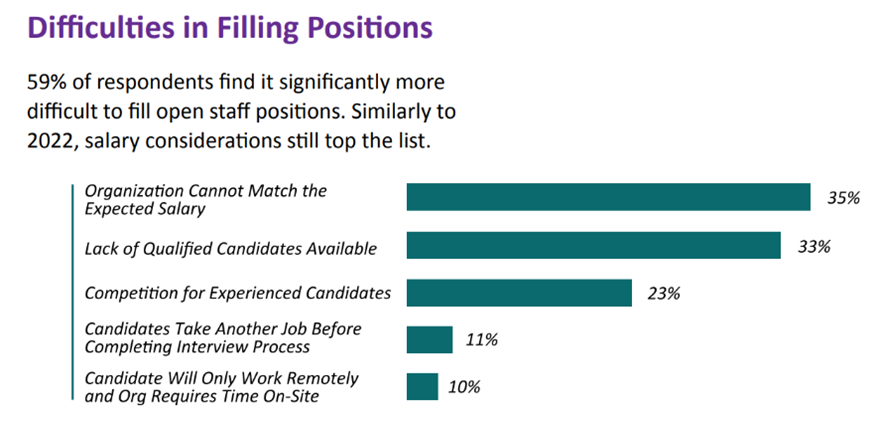
We’ll continue to see nonprofit staffing shortages in 2025, particularly in leadership positions. According to a recent report from PNP Staffing Group, almost 1 in 3 nonprofits struggle with retention and turnover and 59% of nonprofits said it was significantly harder to fill staff positions in 2024 than in previous years. This trend will most likely continue into the new year, as 55% of nonprofit organizations cite the inability to offer competitive salaries as a significant challenge.
The outlook for mental health care in particular shows a significant gap, with position openings projected to grow at triple the rate of all occupations over the next decade. Need is even higher in rural areas across the U.S. where approximately 122 million people do not have access to mental health services. In fact, roughly 27 million Americans with a mental illness are not receiving treatment. Mental Health organizations specializing in youth care face an even greater workforce deficit: In 70% of U.S. counties, there are no child or young adult psychiatrists and only 20% of children with mental health disorders receive the care they need from a specialized mental health provider.
Leadership gaps reveal inequities and barriers to advancement.
Interest in nonprofit leadership positions is also declining. A recent survey by the Building Movement Project shows that there has been a steady decline in interest in top leadership roles. In 2016, 50% of white and 40% of BIPOC respondents were interested in these roles whereas in 2022 this fell to 46% for white and 32% for BIPOC respondents. Though the nonprofit leadership pipeline crisis has been growing for decades, the pandemic exacerbated the issue with high turnover, burnout, and early retirements at the leadership level. Our sector is at a critical moment. We must address the barriers to leadership pipelines, including lack of mentorship and support opportunities, particularly for leaders of color, eschew rigid job requirements, and proactively address burnout and inadequate salaries, if we want to close these gaps in 2025.
With support from the Robert Wood Johnson Foundation (RWJF), Social Current has partnered with the American Public Human Services Association (APHSA) on the “Equip the Flip” initiative. This initiative seeks to create a new leadership framework that can support leaders by addressing structural racism, shifting power to authentically center community voices, and advancing diversity, equity, inclusion, and belonging across the sector. Through focus groups, story gathering, and a review of the literature and lived experiences, we have been able to map the next generation of leadership competencies for human service leaders – keeping them actionable and human-centered. The competencies developed from the Equip the Flip initiative show that social sector leaders need development in the following skillsets:
- Visionary Impact: The ability to communicate a clear and compelling vision for the equitable future of people and communities served and to inspire people to act on that vision.
- Participatory Design: The ability to create the conditions to co-design and empower the community in furthering community-led goals.
- Workforce Well-Being: The ability to model and actively promote well-being for all staff and build a productive, inclusive team that works in partnership with all people and communities.
- Generative Partnerships: The ability to foster partnerships that advance community-led solutions, and together generate new possibilities, resources, and improved outcomes.
- Cultural Belonging: The ability to embrace and honor the authenticity of an individual and their own cultural experiences and practices.
- Operational Impact: The ability to manage the organization’s resources and operations in service of community outcomes.
- Political Literacy: The ability to focus on the capacity building necessary for engaging and understanding, government affairs, policy work, advocacy efforts, and legislative affairs.
Learn more about the Equip the Flip initiative online.
Organizations are prioritizing employee mental health due to increasing rates of burnout.
The most recent State of Nonprofits Survey from the Center for Effective Philanthropy reveals that 95% of nonprofit CEOs are concerned about burnout at their organization and over 50% of those CEOs reported feeling more burnout themselves than in previous years. In Mental Health America’s recent Mind the Workplace Report, Millennials and Gen-Z had the worst work mental health scores, with 59% and 71% reporting unhealthy scores, respectively.
In 2025, support your nonprofit workplace with best practices in workforce resilience and employee wellness. In addition to paying living wages and comprehensive benefits packages, offer paid time off to encourage rest and rejuvenation, offer flexible and/or less than 40-hour work week schedules, create a resilient culture by training staff on trauma-informed workplace approaches, and allocate protected time for professional growth and development.
PQI: Nonprofits are developing and updating their PQI Models to stay sustainable and mission oriented.
The term VUCA (volatility, uncertainty, complexity, ambiguity) is over 30 years old, and yet it is increasingly resurfacing in recent business articles and blogs as we face a very VUCA political landscape to start out 2025. VUCA in the social sector field is the new constant and nonprofits must stay agile and change-ready.
When it comes to program evaluation and continuous improvement, nonprofits are updating their Performance & Quality Improvement (PQI) strategies to be more flexible, dynamic, and gather real-time feedback for swift course correction. PQI models provide a structured approach to evaluating programs, identifying areas for improvement, and driving evidence-based decision making to improve organizational outcomes. By tracking key performance indicators and analyzing data, nonprofits can make informed decisions about resource allocation, staff training, and program design. This data-driven approach helps nonprofits demonstrate accountability to funders, donors, and the community, while also fostering a culture of continuous improvement. Check out Social Current’s webinars to design or update your own PQI plan: Introduction to Logic Models and Logic Models 2.0: Connecting Program to Action.
Partnering with Social Cooperatives: Nonprofits are promoting worker co-ops through incubation.
Another growing workforce resilience trend is an increase in partnerships between established nonprofits and worker cooperatives. Over the past 50 years, social cooperative workplace models have been on the rise. This model deconstructs traditional hierarchical organization models in favor of worker voice and participation. This typically takes the form of equal (or more equitable) distribution of profit and shareholder power. To facilitate this rise, nonprofit organizations have stepped in to incubate social cooperatives that support marginalized communities by providing funding, staff, support, and resources to launch and develop fledgling worker cooperatives. This promising partnership model combines the social mission of nonprofits with the economic benefits of cooperatives. The U.S. could accelerate the development of a more equitable and sustainable economy by following the social cooperative models of countries such as France, Italy, and the U.K., that provide legal recognition and tax incentives for social cooperatives. To learn more, check out our Social Collaborative & Nonprofit Partnerships resource handout from the Social Current Knowledge and Insights Center.
Social Current is Here to Help you Navigate Workforce Trends
We recognize that staff at nonprofit organizations are facing change, stress, and conflict on multiple levels. Political polarization, isolation, and vicarious trauma are contributing to staff feeling drained and disengaged. Our Workforce Wellbeing & Resilience During Times of Change Learning Series is a great place to develop crucial competencies that will help your workforce thrive.
This four-part webinar series will equip leaders and supervisors with foundational knowledge and skills to help their teams manage uncertainty and interpersonal conflict so they can create a healthy and resilient organizational culture. To empower their staff, participants will learn about core strategies and tactics that are based in brain science research and trauma-informed approaches.
Sessions in this series:
- Create a Brain-Friendly Work Culture: March 26 from 2-3:15 p.m. ET
- Foster Candidness through Psychological Safety: April 2 from 2-3:15 p.m. ET
- Prioritize Positive Workplace Culture Around Shared Values: May 28 from 2-3:15 p.m. ET
- Integrate Connection and Community: June 25 from 2-3:15 p.m. ET
To go even deeper, Social Current offers consulting with workforce resilience experts, train-the-trainer opportunities, in-depth in-person training, and more to strengthen your workplace culture. Learn more about our expertise and solutions.
The mentorship program offered as part of Social Current’s Executive Leadership Institute (ELI) plays a pivotal role in developing transformative leaders. By pairing seasoned leaders with emerging talent, ELI creates a unique, supportive environment where knowledge sharing, personal growth, and professional development converge.

For this article, we asked an ELI mentor pair to share their experiences and shed light on the significant impact of their relationship on the broader leadership learning process. Mentor Kevin Walsh is a retired executive with 43 years of experience in child welfare, mental health, and juvenile justice in New York State, and mentee Althea Birch is the director of community programs at The Advocate Program in Miami.
Complementing On-Site Learning Through Mentorship
For many ELI students, the week of onsite learning is the foundation of their leadership journey. However, it is the mentoring component that provides the essential bridge to real-world application. According to Walsh, the in-person experience and additional virtual learning are crucial for providing a theoretical framework on leadership, but the program’s true value emerges when participants are encouraged to translate these lessons into action.
“While the onsite sessions provide critical insights into the challenges facing leadership today, working with a mentor allows the mentee to apply these concepts to real situations within their own organization,” Walsh explains. For example, Birch embarked on a project to expand her organization’s board of directors to include a member with lived experience. With Walsh’s guidance, this goal became not just a theoretical exercise, but a transformative action which reshaped Birch’s organization.

The focus on action-based learning is what sets ELI apart. Each student works on a project that requires them to implement the skills and insights they’ve gained, with their mentor acting as a neutral, experienced guide. “The mentor’s role is to help the mentee reflect on the challenges they face, not to solve the problem for them,” explains Walsh. This reflective process, which is central to adult learning, allows the mentee to deepen their leadership practice and approach issues from new perspectives.
Mentorship as a Personal Development Journey
Mentorship within ELI is not just about professional growth; it is deeply intertwined with personal development. The mentor shares their expertise and helps the mentee work through their leadership challenges. As Walsh highlights, “Mentoring is about guiding the mentee on a personal journey toward becoming a stronger leader.” This means fostering a space where mentees can think critically, voice their concerns, and reflect on their growth.
For the mentees, the experience is equally impactful. “Kevin was an unbiased sounding board,” says Birch, reflecting on the mentorship experience. “His guidance helped me make better leadership decisions.” The mentor-mentee dynamic offered Birch a chance to step back and analyze her leadership style, without the pressures of a supervisor-employee relationship. This created a safe space for reflection and growth.
Benefits to Both Mentor and Mentee
While mentorship is primarily focused on supporting the mentee’s development, mentors also benefit significantly from the experience. For Walsh, the chance to work with mentees has kept him engaged and connected to the evolving trends in the nonprofit sector. “I am constantly learning from my mentees,” Walsh shares. “Working with individuals facing different challenges keeps me sharp and connected to the changing landscape of leadership.”
For the mentee, the benefits are clear: Continuous support, expert guidance, and an opportunity to learn from someone who has walked the path before. “Kevin’s nonprofit leadership experience gave me a wealth of guidance,” Birch shares. “He helped me understand that even small accomplishments matter in leadership, and he gave me the encouragement to keep moving forward.”
Overcoming Challenges Together
Like any relationship, the mentor-mentee partnership can face challenges. Walsh reflects on early struggles with understanding the fine line between coaching and mentoring. “It was difficult at first to resist the urge to offer advice on how to solve problems,” he admits. “But the true role of a mentor is to help the mentee reflect, not provide direct solutions.” With practice and support from other mentors in ELI’s alumni community, Walsh honed his active listening skills, ensuring that he could better guide Birch’s self-reflection.
For Birch, challenges were minimal, but the consistency of open communication was key. “Kevin was always available and supportive,” she explains. “Even between our scheduled meetings, I knew I could reach out if I needed guidance.”
A Lasting Impact
Perhaps the most powerful aspect of the ELI mentorship program and the institute overall is the longevity of relationships with peers and advisors in the sector. The connections formed during the program do not end when students graduate from the institute. As Birch shares, “I know I can continue to reach out to Kevin throughout my leadership journey.” This enduring support is what makes ELI’s mentoring approach unique — it is not just about guiding participants during the course, but about establishing a lasting partnership for continued growth.
Learn More About the Executive Leadership Institute
The mentor-mentee relationships forged through ELI are more than just professional connections—they are partnerships that nurture personal growth, challenge assumptions, and develop leadership skills. These relationships provide a critical complement to the in-person and virtual learning experience, offering mentees the chance to apply new concepts in real-world settings while growing as leaders.
View details online for the 2025 Executive Leadership Institute, to be held June 8-12 at Loyola University Chicago.
To learn more about how you can develop your leadership skills and make a lasting impact, join our free informational webinar about the institute Feb. 20.
Social Current is seeking competitive submissions for its 2025 Innovative Impact Award. Too often great ideas are kept in-house without recognizing their potential to create change beyond the communities where they were born. Social Current’s Innovative Impact Award identifies, documents, and celebrates examples of successful approaches to management and service delivery practices adopted by our network organizations.
The Innovative Impact Award will spotlight the efforts of Social Current network organizations—their staff, board, volunteers, and partners—who innovate for good to create lasting change with families and communities.
We invite you to share your successful strategies and serve as a resource for community-based organizations, leaders, researchers, and advocates across the full spectrum of human and social services.
Applications should be submitted online by March 24. Submissions must include a synopsis of your innovative practice and a case study narrative that addresses the evaluation criteria.
Learn more about our 2024 Innovative Impact Award winner Children & Families First Delaware, which was recognized for its Brain Science Training Institute. Read their guest article, The Business of Healing: How Trauma-Informed Care Revolutionizes Organizational Strategy, online.
Winner Benefits
The 2025 Innovative Impact Award winner will receive national visibility and promotion from both Social Current and participating national associations. The winner will also receive the following benefits:
- Showcase on Social Current’s website, newsletter, and social media platforms
- A virtual interview promoting your strategy
- Special award promotion toolkit including image assets, quotes, and sample language to develop your communications and use on your website
- Award plaque
- An opportunity to present a 90-minute workshop Social Current’s SPARK 2025 conference in Chicago, Oct. 20-21.
- Guest article on Social Current’s website
Submission Guidelines
Use our online submission form to submit a synopsis (2,500 character maximum) and case study narrative (five page maximum) about your innovative practice by March 24, 2025. Your case study narrative should introduce the innovative practice and how it has contributed toward positive service delivery outcomes and organizational success. In writing your case study narrative, note the award evaluation criteria and consider addressing the following:
- Describe your target population
- Describe your program and the practices or approach that make it innovative
- What evidence or results show the positive impact of the program
When filling out the form, you’ll need to indicate:
- Your organization’s name
- The primary contact for the award submission
- The name of your innovative practice
Evaluation Criteria
Planning and Presentation (20%)
- Well-written, succinct, and logical presentation of the goals
- Well-designed and detailed plan of approach and implementation of the innovative practice
- Practice addresses an important problem or issue
- Applicant made effective use of all resources in the implementation of the innovative practice
Performance and Quality Improvement (30%)
- The goals of the improvement activity show measurable results, as documented in program, client, or other positive organizational outcomes
- Statistical data and/or conclusions drawn from qualitative and/or quantitative data are sound and support positive outcomes over a sustained period of time
- Risk factors or other obstacles associated with the practical have been identified, and a plan for mitigating them has been developed
- Results can be replicated and innovative practices can be implemented and integrated into existing systems at other organizations
Innovation (50%)
- Descriptive evidence that the applicant supports creative activities that lead to innovation
- Demonstration that the case being highlighted is new and forward thinking as evidenced by a creative, novel, inventive, or original improvement in an area(s) that ultimately provides measurable benefit (i.e., increases in service quality, efficiency, cost-effectiveness, learning, collaboration, timeliness, etc.) to the organization, its workforce, and/or the population targeted for service
- There is reach, depth, and impact of the innovative practice:
- On the community, government regulations and/or initiatives, and/or the human services field, in general
- In addressing an urgent, relevant, or complex need
- In expanding traditional organizational boundaries
Eligibility Terms and Conditions
- The primary applicant must be either currently COA-accredited, undergoing COA Accreditation (in-process) with no major vital occurrences on file, and/or an Impact Partner.
- Applicants must submit a complete and thorough application form and case study narrative according to the directions.
- Previously published case studies may be submitted if the author has already received permission from the award committee for republication. This permission must be documented on the application form.
- Case studies that were applicants for Social Current’s Innovative Impact Award in previous years may only be resubmitted when the associated practices and/or outcomes have significantly changed.
- The applicant must agree that they have read and understand the following conflicts of interest statements:
- Award applications do not confer, impart, or guarantee positively or negatively on any current or future accreditation decision.
- Applications representing more than one organization need to have the consent of all applicable parties.
- Organizational applicants that permit research with service recipients are in accordance with applicable legal requirements.
- Winning applicant agrees that Social Current can promote and distribute the case study narrative in its entirety and recognize the organization and authors in any related marketing promotions.
- Social Current reserves the right to consider public and organizational record information pertaining to any applicant for the Innovative Impact Award.
Note: Social Current will not accept submissions that are designed to endorse, market, or sell commercial products and/or services.
Apply online by March 24. Contact Social Current with questions.