
The 2026 edition of updates to the standards for COA Accreditation, a service of Social Current, is now available. These targeted enhancements to the standards are the result of our annual update process and include changes based on ongoing collection and analysis of feedback received from our network, collaboration with diverse groups of subject matter experts, and a review of research and professional literature on identified trends and evolving practices.
Our collaborative update process is designed to ensure the standards remain up-to-date, research-based, and field-informed, promoting improved outcomes for individuals, families, and communities.
When It Is Happening
Standards assignments for COA Accreditation using the new standards began April 20.
What’s Changing In Our Standards
Public Agency Administration and Management Standards
The standards for public agencies have been updated to ensure they remain current, research-based, and informed by practice in the field while supporting improved outcomes for individuals, families, and communities. These updates reflect the diverse structures and functional responsibilities of public entities and provide enhanced rating guidance to promote greater transparency and inter-rater reliability. The revisions are the result of a 12-month collaborative process with representatives from accredited public agencies, including one-on-one interviews, facilitated group discussions, and a review of relevant research and professional literature addressing emerging challenges, trends, and evolving practices in the public sector.
Who’s Affected
These changes impact private, public, and Canadian organizations seeking COA accreditation or reaccreditation. The 2026 edition of updates will not impact organizations that are currently pursuing accreditation or re-accreditation and have already been assigned standards in the MyCOA portal.
Our Standards Update Process
The 2026 COA Accreditation standards updates reflect changes made based on evolving practices, ongoing review of relevant literature, and the continuous feedback we receive from our network, including volunteer reviewers and accredited organizations. More specifically, updating the 2026 standards involved:
- Collection, in-depth review, and synthesis of prominent published research and professional literature in targeted areas
- Review of standards drafts and discussion of trends in the field with Standards Advisory Panels comprised of subject matter experts, agency leaders, and service providers
- Collection and review of feedback solicited from Social Current’s network, including through the “Provide Feedback” button found in the MyCOA and VIP portals
- Sharing drafts online for a period of field comment to solicit feedback from Social Current’s network and the broader social service sector
Questions?
If you are currently pursuing accreditation or re-accreditation, please reach out to your accreditation coordinator.
If you are seeking accreditation for the first time, join an introductory webinar or contact Joe Perrow, senior manager of network engagement and growth at Social Current.
For additional information about COA Accreditation standards, please contact Melissa Dury, director of standards at Social Current.
On April 24, the Substance Abuse and Mental Health Services Administration (SAMHSA) sent out a Dear Colleague Letter, following a recent executive order, Ending Crime and Disorder on America’s Streets.
The letter outlines the agencies’ movement against harm reduction, expanding their list of prohibited harm reduction services and clarifying which services will remain supported by HHS funding. The letter also provided guidance to state agency leadership and grantees regarding the supplies and services previously defined under the umbrella of harm reduction that could be supported with SAMHSA funding.
A second letter, also published on April 24, shares core clinical tenets, including ensuring medications prescribed to treat substance use disorders are accompanied by needed supportive services, including legal, housing, and family functioning. The letter also provides new language to be included in updated terms and conditions for current grantees and in new FY2026 funding announcements for all relevant treatment services, training, and technical assistance.
The letter aims to ensure the clinically appropriate use of medications in the treatment of opioid use disorder. The guidance is also intended to confirm that SAMHSA funding, training, and technical assistance are advancing care models that address the complex psychosocial needs of individuals with opioid use disorder, rather than medication-only models.
Department of Education Issues Rule to Implement Key Changes to Student Loan Borrowing and Repayment
The U.S. Department of Education has issued a rule to guide the implementation of student loan borrowing and repayment provisions enacted by the recent tax reconciliation bill, H.R. 1.
The rule encompasses three key provisions,
Establishes annual and total loan limits for graduate and professional students
- Beginning on or after July 1, 2026, Graduate student loans are capped annually at $20,500, with an aggregate cap of $100,000
- Professional student loans are capped annually at $50,000, with an aggregate cap of $200,000
- All borrowers who receive a loan made on or after July 1, 2026, are subject to an aggregate lifetime loan limit of $257,500, with narrow exceptions
Revises forbearance and deferment eligibility
- For loans made on or after July 1, 2027, borrowers will no longer be able to access economic hardship and unemployment deferments
- A general forbearance of up to 9 months within a 24-month period and critical deferments for cancer treatment, military service, and time spent in school will remain
Introduces two new repayment plans, the Tiered Standard plan and the Repayment Assistance Plan, available to new and current borrowers beginning on July 1, 2026
- The Tiered Standard plan will be the only fixed repayment option available to borrowers who receive a Direct Loan on or after July 1, 2026. It provides fixed monthly payments over a period ranging from 10 to 25 years, based on the borrower’s outstanding principal balance.
- The Repayment Assistance Plan adjusts payments by income and family size and waives unpaid interest for borrowers who make on-time payments that do not fully cover accruing interest. On-time payments made under RAP will count as qualifying payments for the purposes of the Public Service Loan Forgiveness program.
The Department of Education outlined additional provisions through the following fact sheet.
House Ways and Means Committee Advances Foster Care Modernization Legislation
The House Ways and Means Committee unanimously approved six bipartisan bills to modernize the John H. Chafee Foster Care Program for Successful Transition to Adulthood. The Chafee program provides funding to support young adults in or formerly in foster care in their transition to adulthood through formula grants awarded to child welfare agencies in states and participating tribes.
Collectively, the reforms aim to improve state utilization of Chafee funds, strengthen coordination between child welfare agencies and federal housing programs, expand access to educational support and workforce training opportunities, improve support for foster youth who are parents or soon-to-be parents, expand access to legal services, and prioritize support networks and permanency for foster youth.
The House Committee on Ways and Means shared summaries and fact sheets of each bill in the following press release.
House Advances Farm Bill
On April 30, the House of Representatives passed H.R. 7567, the 2027 Agriculture, Rural Development, Food and Drug Administration, and Related Agencies funding bill. Representatives voted 224 to 200 to pass the measure, with 209 Republicans, 14 Democrats, and one independent voting in favor. Three Republicans and 197 Democrats opposed the measure.
Often referred to as the Farm Bill, the legislation reauthorizes agricultural and food programs for the next five years. It aims to invest in agriculture research, ensure the safety of food, drugs, and medical devices, protect access to nutrition programs for low-income Americans, and strengthen national security and border protections. However, Democratic representatives have expressed strong concerns about the bill’s potential to increase costs for farmers and rural communities and endanger access to essential nutrition assistance programs.
Legislation Enacted to Fund DHS, Ending 76 Day Shutdown
On April 30, President Trump signed H.R. 7147, Homeland Security and Further Additional Continuing Appropriations Act, 2026, into law, ending the Department of Homeland Security’s historic shutdown.
The bill funds the Transportation Security Administration (TSA), Federal Emergency Management Agency (FEMA), the U.S. Coast Guard, and other critical agencies. It does not include funding for Immigration and Customs Enforcement and parts of Customs and Border Protection. However, the agencies have retained significant funding following appropriations through the recent tax reconciliation bill, H.R. 1. Congress is also expected to appropriate $70 billion in additional funding to Immigration and Customs Enforcement and U.S. Customs and Border Protection through future legislation.
Sector Updates from the Judiciary
Federal Court Upholds Medicaid Funding for Hospitals Providing Gender Affirming Care to Minors
The U.S. District Court for the District of Oregon denied federal efforts to withhold federal funding for hospitals that provide gender affirming care to minors, determining the action exceeded the authority of the Secretary of the Department of Health and Human Services.
A coalition of states filed a lawsuit shortly after the Secretary’s declaration, which claimed that “[s]ex-rejecting procedures for children and adolescents are neither safe nor effective.” The states argued that the declaration violated the Administrative Procedure Act’s mandatory notice-and-comment rulemaking requirement and illegally superseded state authority over medical standards of care.
Supreme Court Decision Endangers the Voting Rights Act
The Supreme Court significantly narrowed a key provision of the Voting Rights Act, a landmark civil rights-era law, by a 6-3 majority.
The decision follows the redrawing of a Congressional map within Louisiana after federal courts found a 2022 map likely violated Section 2 of the Voting Rights Act. However, the Supreme Court majority determined that evidence of racial disparity in the drawing of earlier maps was too weak to justify the use of race to draw the new map. The justices determined that racial discrimination in previous maps does not have to be proven outright to justify using race to draw a new map.
For decades, Section 2 has broadly outlawed discrimination in voting on the basis of race and has been interpreted to allow, and sometimes demand, the use of race-conscious data in redistricting to protect the voting power of minorities. However, following the verdict, state maps may only be challenged where it can be shown that there was intentional racial discrimination, an incredibly challenging standard to prove.
Subscribe to the Policy and Advocacy Radar to receive our biweekly policy roundup, which includes commentary on issues in Social Current’s federal policy agenda, opportunities to take action, and curated news and opportunities.
As the second quarter of 2026 begins, the social sector is navigating a complex landscape of both opportunities and challenges. The gap between service demands and organizational capacity is widening due to diminishing funding and continued funding disruptions. Community needs have increased significantly, exacerbating critical access gaps in affordable housing, financial security, youth programs, and mental health and substance use services. Looking ahead, 85% of organizations anticipate that this demand will continue to climb throughout the year, and a sobering 54% of these providers do not expect to have the capacity or resources to meet the needs of those they serve.
To effectively strategize, organizations must identify relevant trends, analyze their potential impacts, and understand their implications for community well-being.
Social Current has released a new trend report on topics that our subject matter experts and Knowledge and Insights Center staff will be following closely in the second quarter of 2026:
- Government Affairs and Advocacy including the housing affordability crisis and recent legislation and executive orders to address it
- Workforce Well-Being including the living wage and benefits gap affecting nonprofit staff
- Leadership and Organizational Development including the need to strategically diversify revenue sources
- Philanthropy including the increase in donor advised funds and how it should impact your fund development strategy
Download the full trend report for insight and related Social Current solutions.
Specialized Research Tools for Human and Social Services
Social Current’s Knowledge and Insights Center offers a robust resources portal, which includes a digital clearinghouse library with over 20,000 records; aggregated research and business databases; diverse topic collections and library guides; original content summarizing complex information; and coaching that helps users maximize these resources.
As you plan for 2026 and beyond, make sure you’re utilizing all the tools in your toolbox. For more information about available tools and support, visit our website or contact the Knowledge and Insights Center.
The social sector is built on values of empathy, trust, and shared advocacy. Additionally, the ability to navigate complex human dynamics and sustain interpersonal relationships can take service delivery and workplace dynamics from transactional to transformative.
However, face-to-face conversations are increasingly replaced with asynchronous communication, like email, and we are juggling ever-increasing workloads. This can leave us feeling like our interpersonal “connective tissue” is fraying. While technology can facilitate communication, it can also erode our active listening skills, which are essential for building relationships. Because reclaiming these interpersonal skills is necessary for achieving our goals and creating an impact, it is the focus of this month’s recommended reads.
To help develop your interpersonal communication skills, Social Current’s Knowledge and Insights Center (KIC) recommends these books. Through KIC access, organizations can easily gain insights from top resources:
- Business Books Summaries: Featuring book briefs that convey key concepts in 10 pages or less
- Learning Community Courses: Interactive, self-paced courses to develop essential skills
Staff at Social Current Impact Partners and organizations that have achieved private, Canadian, and public COA Accreditation should log in to access these resources.
KIC access can be purchased individually or as a benefit of an Impact Partnership or COA Accreditation.
Business Book Summaries
Conversations Worth Having – Jackie Stavros & Cheri Torres
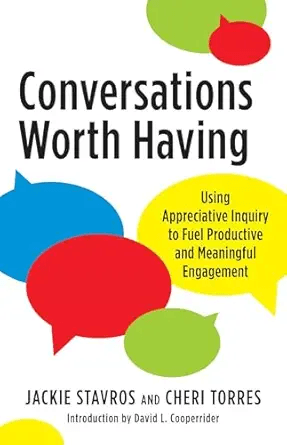
Conversations Worth Having introduces professionals to the transformative power of Appreciative Inquiry (AI) – a strengths-based approach to communication that shifts the focus from fixing problems to fueling possibilities. Through engaging real-world stories and evidence-based techniques, authors Jackie Stavros and Cheri Torres reveal how the two simple practices of positive framing and generative questions can fundamentally change the trajectory of any interaction. The strategic communication tools in this book will help you unlock creative thinking in your team and ensure that every meeting and one-on-one becomes a “conversation worth having.”
Access the business book summary.
In the Moment – Niel Mullarkey

In a world of rigid scripts and endless slide decks, the most effective professionals are those who can think on their feet. In the Moment draws on the principles of improvisational theater to help you navigate the unpredictability of the modern workplace communications with poise and agility. In the Moment helps you strengthen your professional relationships through active listening, adopting a “Yes, and…” mindset, and replacing defensive communication with a collaborative approach. Stop over-preparing and start engaging! Turn every meeting and conversation into an opportunity to lead with confidence and creativity.
Access the business book summary.
Communicate with Courage – Michelle D. Gladieux

In Communicate with Courage, executive coach Michelle Gladieux identifies the four hidden challenges that quietly sabotage our professional potential: 1) Avoiding risk, 2) Needing to be right, 3) Shielding ourselves from feedback, and 4) Settling for “good enough.” By confronting these psychological barriers, you can transition from safe, scripted interactions to brave, intentional dialogue. Gladieux’s strategies will help you strengthen your interpersonal bonds through radical self-awareness and engaging in healthy conflict to build interpersonal connections that last.
Access the business book summary.
Learning Community Courses
If you prefer a more interactive format, take one of Social Current’s on-demand courses. Through the self-paced, multimedia learning platform, you’ll gain a deep understanding of the key concepts and practices of effective interpersonal communication.
On April 13, the Administration for Children and Families (ACF) published a Dear Colleague letter with sample program language and program requirements for well-supported home visiting models. States and Tribes may incorporate these services into existing Title IV-E five-year prevention plans through the established plan amendment process.
Integrating pre-reviewed language and requirements will accelerate approval for Title IV-E prevention purposes, streamlining review and facilitating more timely deployment. While not required, States and Tribes may also add information about state and tribal-specific implementation plans to add new home visiting services.
ACF Announces 15 Jurisdictions Have Joined a Home for Every Child
The Administration for Children and Families (ACF) recently announced that 14 states and the District of Columbia have joined A Home for Every Child, a bipartisan initiative to increase the number of licensed foster homes relative to the number of children in care. The states include Alabama, Arkansas, Delaware, Iowa, Kansas, Kentucky, Louisiana, Maryland, Mississippi, Missouri, Nebraska, Oklahoma, Tennessee, and Rhode Island.
The Home for Every Child Initiative aims to:
- Safely lower the number of children entering foster care through effective prevention
- Increase the number of foster homes through diligent recruitment, prioritizing kin
- Improve retention of existing caregivers
Nationwide, there are 57 licensed foster homes for every 100 children in care, a gap the initiative aims to close. Assistant Secretary Alex J. Adams stressed the importance of the metric for states to meaningfully pursue improving this ratio while tracking permanency outcomes, kinship placement rates, and prevention services.
To advance a Home for Every Child and support collaboration with states, tribes, and grantees, ACF has announced key staff appointments.
House Ways and Means Committee Hosts Roundtable to Discuss Bipartisan Foster Care Reform
The United States House Committee on Ways & Means held a roundtable discussion with First Lady Melania Trump and foster youth to discuss modernizing the John H. Chafee Foster Care Program for Successful Transition to Adulthood.
The discussion follows the introduction of six bipartisan bills to support current and former foster youth as they exit foster care and transition to adulthood and independence. As a whole, the legislation aims to improve state utilization of Chafee funds, strengthen coordination between child welfare and federal housing programs, expand access to education and workforce training opportunities, improve support for foster youth who are parents or soon-to-be parents, expand access to legal services, and modernize the purposes of the Chafee program.
The Ways & Means Committee has published a brief summarizing the bills.
HRSA Announces Critical Grant Funding to Expand Nutrition Services and Strengthen Rural Health Workforce
The Health Resources and Services Administration (HRSA) announced more than $135 million in grant funding to expand nutrition services and strengthen the rural workforce, improve access to care, enhance preventive services, and reduce the burden of chronic disease. HRSA-funded health centers serve more than 32.4 million patients at over 16,000 sites nationwide, including one in five rural residents.
Expanded Nutrition Services will receive $125 million to support more than 350 HRSA-funded health centers in expanding access to nutrition services and food-based interventions within primary care settings to prevent and manage chronic diseases.
The Rural Residency Planning and Development Program will receive $11.25 million through as many as 15 grants of up to $750,000 each over three years. The funding will support new rural residency programs in high-need specialties, including psychiatry, family medicine, internal medicine, OB-GYN, general surgery, and preventive medicine.
CMS Issues Guidance to Implement New Limits on Federal Medicaid and CHIP Funding Following H.R. 1
The Centers for Medicare & Medicaid Services (CMS) issued letters to states, offering guidance as a key provision of the recent tax and reconciliation bill, H.R. 1, will take effect Oct. 1. The provision will limit states’ ability to claim federal matching funds for Medicaid and the Children’s Health Insurance Program (CHIP) for certain populations of immigrants. The guidance exempts green card holders, Cuban and Haitian entrants, and citizens of certain Pacific island nations.
The guidance is expected to impact health care access for immigrants, especially as states will no longer receive full federal matching funds for the Medicaid or CHIP benefits of refugees, asylees, parolees, and victims of trafficking following H.R. 1. However, federal matching funds remain available for emergency Medicaid. States will also not be required to provide state-only coverage where federal funding is unavailable.
The guidance outlines the required state actions to implement these changes, including eligibility redeterminations for current enrollees, updates to eligibility and verification systems, managed care and financial claiming procedures, and the submission of Medicaid and CHIP state plan amendments.
Sector Updates from the Judiciary
Federal Courts Determine Changes to Continuum of Care Grants Are Illegal
The United States District Court for the District of Rhode Island determined that the sudden funding conditions attached to the Continuum of Care (CoC) program were illegally implemented.
The CoC program is the largest resource for federal homelessness assistance funds. Research conducted by the National Alliance to End Homelessness (NAEH) estimates that the imposed limits to permanent housing would lead more than 170,000 individuals to experience homelessness. Additionally, surveys among grant recipients conducted by the NAEH detailed potential delays in program referrals, increased uncertainty for program participants, and exacerbated staffing challenges.
U.S District Judge Mary McElroy similarly detailed the harm that the amended grant conditions would have and found that the notice announcing the funding opportunities, the new criteria used by HUD when deciding to issue grants, and the one-week application period for the grants were all unlawful. The court also ordered that the funding already approved by Congress must still be awarded.
In addition to the lawsuit filed by a coalition of nonprofits and local governments, several states filed lawsuits challenging the sudden and extensive changes to the CoC program. The First Circuit Court of Appeals also prevented the Trump administration from imposing restrictions on homelessness funding. The First Circuit’s decision keeps an existing injunction in place, allowing billions of dollars in funding to continue to housing-first solutions while the lawsuit continues.
Subscribe to the Policy and Advocacy Radar to receive our biweekly policy roundup, which includes commentary on issues in Social Current’s federal policy agenda, opportunities to take action, and curated news and opportunities.
For human services CEOs, preparing for board meetings can be a time-consuming and frustrating process. Leadership teams often spend significant time preparing presentations when they could be working on other important projects. Additionally, the board meetings themselves can be taxing, rather than collaborative, productive, and energizing.
This guide from Zeck examines the challenges that CEOs and board members face in preparing for and conducting board meetings and provides five critical elements that CEOs must address to transform ensure board meetings are engaging, collaborative, and highly valuable.
The recommendations include:
- It all starts with the board materials and the pre-read. They have to be focused, organized, and engaging.
- The value of pre-meeting communication cannot be understated.
- Set the stage to be collaborative and productive.
- Always include at least one ‘deep dive’ conversation and be honest about where you need help.
- Ensure transparency by looping in your operating team about the board meeting and the board’s feedback.
Dig into these five recommendations by reading the full guide.
Webinar on the Future of Social Sector Governance
The Future of Social Sector Governance: A Conversation with Edward Norton
May 14 from 2-3 p.m. ET
Register now to join Jody Levison-Johnson, president and CEO of Social Current, in conversation with Edward Norton, Zeck co-founder and chief strategy officer and award-winning actor, for a candid, forward-looking discussion on the future of governance. They’ll explore how to evolve your board to be collaborative, strategic, and entrepreneurial, rather than focused on compliance and operations.
Visit the Zeck website to learn more about the cloud-based software platform and how it is transforming the board meeting and driving better decision making.
Social Current recently submitted comments to the General Services Administration opposing a proposal that would require all applicants to agree to three new certifications when registering in the System for Award Management and during each annual renewal. The certifications aim to prohibit grantees from supporting illegal immigration, engaging in illegal activities that threaten public safety or national security, and violating federal antidiscrimination laws.
However, the proposed certifications include vague and complex language that could create significant compliance challenges. Without clear definitions or implementation guidance, the requirements could put human services organizations at risk and lack sufficient safeguards to ensure applicants can reasonably meet the terms.
The proposed changes would broadly affect federal grantees, as nonprofits and state and local governments rely on the System for Award Management to apply for and manage federal funding. The General Services Administration is expected to submit the proposal to the Office of Management and Budget for review.
Executive Order Introduces Notable Changes for Elections
On March 31, President Trump signed an executive order, Ensuring Citizenship Verification and Integrity in Federal Elections.
The order introduces key requirements:
- The Attorney General must prioritize the investigation and the prosecution of any individual engaged in, or aiding and abetting, the printing, production, shipment, or distribution of ballots to people who are ineligible to vote in a federal election.
- The Postmaster General must initiate a rule requiring all outbound ballots to be sent in an envelope marked “Official Election Mail.” Mail-in and absentee ballots must be automation-compatible and trackable by possessing a unique Intelligent Mail barcode, or successor USPS technology.
- Relevant departments and agencies, including the Attorney General, are expected to ensure compliance with federal election law, including by withholding federal funds from noncompliant states and localities.
However, the executive order’s implementation remains uncertain. A coalition of 23 attorneys general has since filed a lawsuit, arguing that the order violates the Constitution, which grants states the authority to oversee elections.
Trump Administration Releases FY27 Budget Proposal
The Trump Administration released its budget proposal for fiscal year 2027. While the proposal is nonbinding, it offers a glimpse of the executive branch’s priorities and serves as a guide to Congress.
The proposal recommended drastic increases to military funding alongside a 10% reduction in non-defense discretionary spending. The greatest funding reductions were made to the Small Business Administration, the National Science Foundation, and the Environmental Protection Agency.
Key recommendations include:
- A $489 million increase for the IDEA State Grants program
- The elimination of the Low Income Home Energy Assistance Program, Community Services Block Grant, Refugee Resettlement Program, Unaccompanied Alien Children program, and FEMA Non-Disaster Grant Programs
- A $30 million investment to expand housing voucher assistance for youth transitioning out of foster care who are at risk of homelessness
- The elimination of the Community Development Block Grant, HOME Investment Partnerships Program, Homeless Assistance Programs, and Fair Housing Initiatives Program
For further information regarding the administration’s priorities, the White House published a fact sheet.
Congress Announces Plan to Fund DHS, Ending the Historic Shutdown, If Passed
Funding for the Department of Homeland Security (DHS) lapsed Feb. 14 and has yet to be restored, threatening the department’s essential functions, including disaster relief. The leaders of the House of Representatives and Senate published a statement on April 1, announcing a pathway to end the partial government shutdown.
The proposal suggests funding most of DHS, excluding Immigration and Customs Enforcement and Customs and Border Protection. Funding to the agencies would be restored and approved for the three years through a future reconciliation bill, which the president has stated would need to be passed by June 1.
Although both chambers of Congress have recessed, the Senate unanimously passed a similar bill, H.R. 7147, March 27. House leadership is expected to return next week to vote on the bill, but Republicans have expressed key concerns regarding its approach.
ACF Continues Deregulatory Efforts Using a Zero-Based Regulation Approach
The Administration for Children and Families (ACF) recently announced the rescission of a grant program no longer in effect, State Legalization Impact Assistance Grants (SLIAG). SLIAG operated from 1987 to 1994 to help states cover costs associated with legalization under federal immigration law, including education, public health, and law enforcement. Although the program has been inactive for decades, it has remained in federal regulations. ACF will remove the regulation, effective May 26, unless the agency receives significant negative comments, which may be submitted through the Federal Register.
Additionally, the agency also issued two Notices of Proposed Rulemaking to remove duplicative regulations involving Native American programs and services for repatriated nationals with mental illness. Both comment periods end April 27.
The Administration for Children and Families rulemaking actions follow a comprehensive review using a Zero-Based Regulation approach, which evaluates whether existing rules are still necessary. ACF program offices assess regulations for relevance, duplication, and burden, identifying those that are obsolete or no longer serve their intended purpose. For further information, Alex Adams, the Assistant Secretary of ACF, authored a brief through the Manhattan Institute.
ACF Announces the Addition of New Evidence-Based Interventions to the Title IV-E Prevention Services Clearinghouse
The Administration for Children and Families (ACF) at the U.S. Department of Health and Human Services announced the addition of new evidence-based interventions to the Title IV-E Prevention Services Clearinghouse. The Office of Planning, Research, and Evaluation (OPRE) conducted rigorous reviews of each evidence-based intervention to ensure that only programs with demonstrated effectiveness are eligible for federal reimbursement under Title IV-E prevention services funding.
The approved programs and services include:
- Incredible Years — Preschool Basic Program (Re-review), Promising
- Multidimensional Family Therapy (Re-review), Well-Supported
- Multisystemic Therapy for Child Abuse and Neglect (Re-review), Supported
- Solution-Focused Brief Therapy, Promising
In the press release, the Assistant Secretary of ACF, Alex J. Adams, stressed the importance of prevention within the agency’s initiative, A Home for Every Child. The Home for Every Child initiative aims to safely lower the number of children entering foster care through effective prevention, while also increasing the number of foster homes through diligent recruitment, prioritizing kin, and improving retention of existing caregivers.
Department of Education Announces Next Steps for Borrowers Enrolled in the SAVE Plan
On March 27, the U.S. Department of Education began issuing guidance to all borrowers enrolled in the Saving on a Valuable Education (SAVE) Plan, directing them to exit the plan and enter a legal federal student loan repayment plan.
The guidance follows a court decision approving a joint settlement between the Department of Education and the State of Missouri. The settlement ordered the Department of Education not to enroll any new borrowers in the SAVE Plan, deny any pending applications, and move all SAVE Plan borrowers into legal repayment plans.
The SAVE Plan was first implemented in February 2024 through a provision of regulations that provided loan forgiveness for borrowers who had been in repayment for 10 years and borrowed $12,000 or less in student loans. The plan would have granted nearly $1.2 billion in loan forgiveness for almost 153,000 borrowers.
Departments of Education and Treasury Announce Partnership to Guide Student Loan Borrowers in Default
On March 19, the U.S. Department of Education and the U.S. Department of the Treasury announced the Federal Student Assistance Partnership to enhance the administration of Federal student aid programs and facilitate the return of defaulted borrowers to repayment.
The Department of the Treasury will assume operational responsibility for collecting on defaulted Federal student loan debt and provide operational support to the Department of Education’s efforts to return borrowers to repayment. In subsequent phases, Treasury will work to provide operational support for non-defaulted Federal student loan debt, while also seeking opportunities to support the Office of Federal Student Aid’s other functions.
The decision arrives as the Department of Education reports that fewer than 40 percent of borrowers are in repayment and nearly 25 percent are in default.
For further information, the Departments issued a fact sheet.
House Appropriations Committee Discusses Leveraging Federal Funding for Adoption Programs
The House Appropriations Committee recently held a hearing entitled, Advancing Permanency in Child Welfare: Leveraging Federal Funding for Adoption Programs. Members and witnesses alike highlighted the importance of adoption in providing children with safe, stable homes and supporting community well-being.
Witnesses detailed the challenges states face in facilitating timely, safe, and stable adoptions for children in need. Recommendations to improve post-adoption outcomes included:
- A greater focus on recruitment and screening of adoptive families
- Matching prospective families and children
- Supporting preparation and offering post-adoption support
- Exploring community-based, Tribally aligned opportunities in adoption
- Reducing legal and bureaucratic complexity
- Sustaining a skilled permanency workforce
Sector Updates from the Judiciary
Federal Court Upholds the Johnson Amendment
The U.S. District Court for the Eastern District of Texas rejected a proposed consent agreement between the Internal Revenue Service, churches, and religious organizations.
Had it been accepted, churches would have been permitted to endorse political candidates while maintaining their tax-exempt status. However, the district court dismissed the lawsuit, determining that federal law prohibits it from interfering in matters of tax assessment.
The Johnson Amendment stands as a foundational protection for the nonprofit sector by prohibiting tax-exempt organizations from participating or intervening in political campaigns.
The lawsuit was filed by the National Religious Broadcasters, Intercessors for America, and two churches. The plaintiffs maintained that the Johnson Amendment violates their 1st Amendment rights to freedom of speech and religion.
Supreme Court Overturns Colorado’s Conversion Therapy Ban
The Supreme Court, in an 8 to 1 decision, overturned a Colorado law, which bans conversion therapy for minors.
Colorado is one of 27 states with laws completely or partially banning conversion therapy for minors. The eight concurring justices cited free speech concerns, noting the Colorado law prevents therapists from saying they can help a minor change their gender identity or same-sex attraction, but permits them to say that such a goal is impossible.
The majority disagreed with Colorado’s contention that the law does not violate the First Amendment because therapy is different from other types of speech as a form of health care that the state has a responsibility to regulate.
Justice Ketanji Brown Jackson, the lone dissenter, spoke to the dangers of the majority opinion. She argued that the majority’s opinion “could be ushering in an era of unprofessional and unsafe medical care administered by effectively unsupervised healthcare providers.”
Researchers have consistently found conversion therapy to be linked to greater symptoms of depression, post-traumatic stress disorder, and suicidality. Major medical and mental health organizations, including the American Psychological Association and the American Academy of Pediatrics, have also advocated for the end of conversion therapy given the practice’s profound harm and violation of core ethical principles.
The future of the laws and their enforcement will depend on a lower court’s verdict after the Supreme Court ordered the 10th Circuit to reconsider the lawsuit with greater concern for the permissibility of regulating free speech.
Federal Court Rules Against Grant Requirements Related to DEI Initiatives
The District Court for the Northern District of Illinois issued a preliminary injunction against the Department of Justice, preventing the agency from forcing any grantee or contractor nationwide to certify that they do not operate programs related to diversity, equity, or inclusion initiatives to receive funding.
Additionally, Judge Matthew F. Kennelly prohibited the implementation of funding conditions that would have required organizations applying for grants through the DOJ’s Services for Victims of Human Trafficking program to agree to cooperate with immigration enforcement.
The lawsuit was brought by Freedom Network USA, the nation’s largest alliance of organizations and individual advocates working with survivors of all forms of human trafficking.
Federal Court Determines HHS Secretary Exceeded Authority in Declaring Gender Affirming Treatments Unsafe
The US District Court for the District of Oregon determined that the Department of Health and Human Services’ Secretary Robert F. Kennedy Jr. failed to follow proper administrative procedures before issuing a declaration regarding the safety, effectiveness, and professional standards of care for gender affirming care procedures for children and adolescents.
The verdict follows a lawsuit filed by 18 states, which claimed that the declaration exceeded Kennedy’s rule-making power and improperly threatened federal funding for clinics and health care providers that provide gender-affirming care.
Subscribe to the Policy and Advocacy Radar to receive our biweekly policy roundup, which includes commentary on issues in Social Current’s federal policy agenda, opportunities to take action, and curated news and opportunities.
In November 2025, Social Current convened cross-sector leaders for Lessons from Within Our Reach: A Cross-Sector Conversation on Child and Family Well-Being. This multiday virtual event explored what we know about preventing child fatalities from maltreatment and what it will take to build a 21st-century system that truly centers families.
The Within Our Reach report made a clear case for upstream prevention and meaningful investments in family support. One of its most enduring messages is that a true investment in familial support is the most effective way to prevent serious child injury and fatalities.
Throughout the virtual convening, Social Current’s Romero Davis reinforced that prevention requires a whole-community approach. Fatality reviews consistently identify breakdowns in coordination across systems, including law enforcement, health care, education, and community-based organizations. Cultural differences, communication gaps, and interpersonal dynamics can weaken collaboration, even when shared goals exist.
The event kicked off with an introductory Q&A with Social Current President and CEO Jody Levison-Johnson, participants discussed how purposeful partnership, shared values, and stronger coordination across systems can address barriers and create more responsive, sustainable supports for families.
Learn more about the sessions and access the individual recordings below. The convening slide deck also is available for download.
Centering Protective Factors and Family Strength
Within Our Reach underscores the importance of strengthening protective factors that reduce the likelihood of abuse and neglect. Rather than focusing solely on risk, the framework calls on communities to build the conditions that help families thrive. Protective factors include:
- Strong social connections
- Access to concrete supports
- Knowledge of parenting and child development, and
- Social and emotional competence in both parents and children.
The shift from crisis response to family strengthening requires intentional policy change and strategic communications. The Building Better Childhoods toolkit, developed by Social Current and Prevent Child Abuse America, uses the “overloaded” metaphor to reframe how we talk about family stress: Just as a vehicle can carry only so much weight before it breaks down, families facing compounding challenges can become overwhelmed.
For this session, presenters Kara Georgi of the Children’s Trust Fund Alliance and consultant Regina Dyton were joined by parents with lived experience. They explored how prevention means lightening the load through accessible child care, economic supports, mental health services, and community-based programs that promote stability, health, and security.
Watch the session recording.
The Power of Narrative in Policy Change
A central theme across sessions was the value of community voice. Social Current’s Senior Director of Government Affairs Blair Abelle-Kiser shared that while data is essential for effective policy, it leaves critical gaps when used alone. Stories are necessary to fill that gap. They build connection, humanize challenges that are created by complex systems, and help decision makers understand how policies affect real families.
Participants explored how to translate lived experience into action using a clear framework:
Value + Problem + Solution + Call to Action
By leading with shared values such as safety, health, and security, advocates can ground policy conversations in common purpose. In her presentation, Blair encourages advocates to keep their stories focused, make specific asks, use strengths-based language, and remain bold and values driven.
Watch the session recording and access the slide deck.
Supporting the Workforce That Supports Families
Workforce strain was another key topic. For this session, Social Current’s Karen Johnson and Kelly Martin were joined by Michael Cull of the Center for Innovation in Population Health and associate professor at the University of Kentucky. Across child- and family-serving fields, including child welfare, education, health care, and community development, professionals are experiencing high levels of burnout and organizations are struggling with retention and recruitment. When workforce well-being suffers, prevention efforts are harder to sustain.
This conversation elevates the importance of promoting self-care and organizational wellness. Sustaining a prevention-oriented child and family well-being system requires investing in the people who carry out this work every day.
Watch the session recording.
Expanding the Circle: Fatherhood and Family Engagement
In his session, Churmell Michell, founder of A Father’s Voice Matters, emphasized fatherhood engagement as a critical prevention strategy. Supportive policies, inclusive programming, and father-friendly practices can strengthen outcomes for children and improve family stability.
Michell discussed how policymakers, child welfare leaders, community-based organizations, and educational institutions can all play a role in advancing father engagement through training, collaboration, and legislative action.
Watch the session recording.
Continuing the Conversation
The final session included collaborative conversations between cross-sector professionals, such as Scott Allen of Cordata Healthcare Innovations and Dr. Rachael J. Keefe of the Baylor College of Medicine.
As collaborative conversations such as these take place, Social Current’s Within Our Reach policy education and communications toolkit evolves as we learn alongside communities and partners. The toolkit offers practical, research-informed resources, including messaging guidance, policy context, and customizable tools, to help organizations effectively communicate and advocate for child and family well-being.
Together, through collaboration, storytelling, and coordinated advocacy, we can build a proactive, equitable child and family well-being system rooted in shared responsibility.
Additional Resources
Download our free reflection and coloring book, which was shared with convening participants. It offers space to pause, process, and reflect on the themes of prevention, protective factors, and shared responsibility.
Social Current also developed these one-pagers related to the convening:
- Self-Care and Well-Being for Families
- Promoting Help-Seeking Behaviors Among Families
- Cross-Sector Support for Families
Preventing child fatalities is within our reach. Learn more about Social Current’s expertise in Child, Family, and Community Well-Being.
Social Current has launched a brief national survey on challenges impacting child welfare providers. The information shared will help inform recommendations for system improvements, policy advocacy, and sustainable models of care that better support children, families, and organizations.
Multiple staff from organizations may complete the survey, including:
- Program directors and managers
- Supervisors
- Front-line staff
Take the survey online by April 23. It should take about 10 minutes to complete.
Insight from this survey will support the work of Five & Rising pilot community Progressive Life Center (PLC) to improve the sustainability and effectiveness of foster care and the broader continuum of family services. The organization looks to inform their efforts with national data on the experiences of staff delivering services every day.
Five & Rising is a Social Current initiative designed to spark bold, community-driven solutions that reimagine the social sector.
Through COA Accreditation, a service of Social Current, we seek to empower organizations to implement best practice standards to improve service delivery and achieve better outcomes for individuals and communities. COA Accreditation provides a framework to help organizations manage resources, incorporate best practices, and strive for continuous improvement.
We believe there is rich expertise in our field, so we ground the COA Accreditation process in our human and social services community. Our volunteer peer reviewers conduct our site visits and finalize accreditation decisions.
We are proud to spotlight the latest Volunteer of the Quarter: John Prior

About John Prior
After graduating from Niagara University in 1975, I started my career as a recreational worker, and then progressed to become a direct care worker, cottage chief, and supervisor. I graduated with my master’s in social work from SUNY Stony Brook in 1982. That same year, I went on to become a therapist at Beech Brook in Ohio, where I provided individual and family therapy in residential and community settings. I later worked at Children’s Home and Aid Society of Illinois in Chicago and Naperville Community Outreach in Illinois, where I served as executive director.
I became familiar with COA Accreditation in the late 1990s with my association with Harris County Protective Services for Children and Adults (HCPSCA) in Texas. Initially, I was consulting with HCPSCA to develop new programs and services to respond to the needs of abused and neglected children. In 2000, the HCPSCA executive director asked me to assist them in developing a response to the new quality improvement (QI) standards from COA. In 2004, HCPSCA institutionalized its QI/PQI efforts by establishing its program improvement team, and I served as team leader. In 2014, I began serving the Catholic Charities of the Archdiocese of Galveston-Houston as director of quality and compliance. This included operation of their PQI program, strengthening of performance goals and data collection capacities, and contract compliance.
Q&A
Who is your role model?
This is a tough one, as I have many people I admire during my journey. My parents were kind and caring people who ran the local grocery store in a small town in New York. It’s amazing how that small store was in a place for the community to not only buy groceries, but also where people shared their life stories, the good, the bad, and the ugly. My parents responded with kindness and support when others experienced tough times. I saw foundational social work values intermixed with the running of a small, successful family business.
Professionally, I was quite fortunate in the early years of my career to have some exceptional supervisors as my role models. John Langseder and Fred Steffen were two supervisors who not only provided me with practical skills and supervision, but also perspective on how to approach the work with clients and colleagues with respect and dignity. As John and Fred would often say: Regardless of your degree or training, the one tool everyone in this field shows up to work with every day is ourselves. In my opinion, knowing how to integrate that professional knowledge with one’s own unique strengths is the sign of a truly professional social worker.
What led you to become a COA Accreditation Volunteer?
While a department of a public county entity, Harris County Protective Services for Children and Adults (HCPSCA) has been COA-accredited for many years. They were accredited long before the standards for public organizations were even developed. When the quality improvement standards (later changed to PQI) were published, I was doing consulting work for HCPSCA in program development. Their executive director asked me to delve into these standards and suggest some ways they could be implemented within their organization. My work with them resulted in their developing a dedicated team to implement PQI throughout the entire department. As that team’s leader, it was clear to me that becoming a COA Accreditation peer reviewer would greatly strengthen my knowledge and understanding of the standards and that knowledge would greatly benefit the organization and my own professional development.
What are your strongest beliefs about the value of COA Accreditation?
In building a PQI system from the ground up at a multiservice public organization, I saw firsthand how the COA Accreditation standards provide a sound foundation for program development and implementation for the entire organization. At HCPSCA, some programs had to comply with state licensing or regulations, but other programs had no such guidance beyond contract requirements (which were mostly financial reporting) or staff knowledge and experience, which varied program to program. The COA Accreditation standards provided a common platform for us to develop a better understanding of our work across all program services. This included providing a common approach, expectations, and language for the organization to develop and implement its programs, evaluate performance, and achieve organizational excellence.
What excites, surprises, and/or challenges you the most about the work you do as a COA Accreditation peer reviewer?
I always say during site visits’ entrance meetings that I truly enjoy meeting good people doing great work in their communities. COA Accreditation and the network of accredited organizations are filled with those kinds of people and great organizations that support their dedication and commitment. I see it all the time on each of my site visits!
Share a memorable place, person, or experience from a site visit.
On one site visit several years ago at a residential treatment facility, I met a 19-year-old young woman who was following us around during the facility tour. I struck up a conversation with her and learned she was a resident and waiting for placement in an adult facility. However, due to the nature of her needs, finding an appropriate placement was proving difficult. Everyone was frustrated with the situation. She asked if she could follow along on the tour, and staff agreed that she could join us. As she and I continued our conversation, she shared how she “hated” the place, but my observations were quite different. As we came across staff throughout the tour, she demonstrated all the characteristics of having strong personal, healthy, therapeutic bonds with staff. It was evident to me that those relationships with staff were important to her. Staff clearly demonstrated a level of care that was nurturing, meaningful, and therapeutic in nature. For me, this was a clear example of my premise of finding good people doing great work.
What advice would you give someone interested in being a COA Accreditation volunteer peer reviewer?
Being a peer reviewer undoubtedly benefits your organization. Being able to observe how others approach the standards is an enlightening experience for me. I have always found that COA Accreditation reviews are a great source of new ideas to bring back to my organization.
More so, being a peer reviewer is a tremendous source for professional and personal development. COA Accreditation reviews are a constant source of real-life learning opportunities for me, even now that I am retired.
Learn more about how to become a peer review volunteer and apply online.