Government Affairs and Advocacy
Oct. 3 Federal Update: U.S. Department of Health and Human Services Announces “Autism Action Plan”
 Social Current
The U.S. Department of Health and Human Services (HHS) recently announced a multifaceted approach to address rising rates of autism spectrum disorder (ASD). Components of this plan include:
Authorizing Treatment with Leucovorin: The Food and Drug Administration (FDA) has published a Federal Register notice outlining a label update for leucovorin for cerebral folate deficiency, which has been associated with autism. As a result, state Medicaid programs will be able to cover leucovorin for the indication of ASD. Additionally, the National Institutes of Health (NIH) will launch confirmatory trials and new research into the impact of leucovorin, including safety studies.
Initiating a Safety Label Change for Acetaminophen: Due to conflicting literature and a lack of clear causal evidence between acetaminophen use during pregnancy and adverse neurodevelopmental outcomes, HHS aims to encourage clinicians to exercise their best judgment. The FDA will accordingly partner with manufacturers to update labeling and drive new research to safeguard mothers, children, and families. HHS will also launch a nationwide public service campaign to inform families and protect public health.
Increasing Research Investment: NIH announced the recipients of the Autism Data Science Initiative (ADSI), funding 13 projects to transform autism research. ADSI integrates large-scale biological, clinical, and behavioral data using an exposomics approach, which examines environmental, nutritional, medical, and social factors in conjunction with genetics.
Head Start Releases Information Memorandum Clarifying Policy Guidance for Vacant Slots
The Administration for Children and Families released an information memorandum to all Head Start recipients, including Head Start Preschool, Early Head Start, Early Head Start-Child Care Partnerships, Collaboration Offices, and National Centers.
The memorandum clarifies when Head Start programs should consider a child’s slot vacant after prolonged absences, emphasizes the importance of regular attendance, and provides strategies for programs to enhance access and participation for children and families.
Head Start Releases Information Memorandum Regarding the Monitoring Process for FY 2026
The Administration for Children and Families released an information memorandum to all Head Start grant recipients. Aligned with the Improving Head Start for School Readiness Act of 2007, the Office of Head Start is required to monitor programs to ensure they meet quality and compliance standards. The information memorandum outlines the monitoring process for fiscal year 2026, including updates to review formats and the schedule for reviews during a grant period.
Key updates to monitoring reviews include streamlining and clarifying review questions, reducing the total number of questions from 449 in FY25 to 203 for FY26, and shortening on-site review days from 5 days to 3 or 3.5 days. The changes focus reviews on the most critical elements for child safety and program integrity, as well as reviewing for compliance with all applicable state statutes and regulations for licensing. The updates are designed to strengthen systems early in the grant cycle, support fiscal integrity, and enable more on-site visits sooner in the process, ensuring a strong organizational foundation is established early in the grant cycle.
Centers for Medicare & Medicaid Services Outline Guidance for Third Round of Medicare Price Negotiations
On Sept. 30, the Centers for Medicare & Medicaid Services issued final guidance that details requirements and parameters for the third cycle of negotiations and the first cycle of renegotiations for the Medicare Drug Price Negotiation Program, which will occur in 2026 and may result in negotiated maximum fair prices (MFPs) that would be effective in 2028.
Federal Funding Lapses Without Further Appropriations Legislation
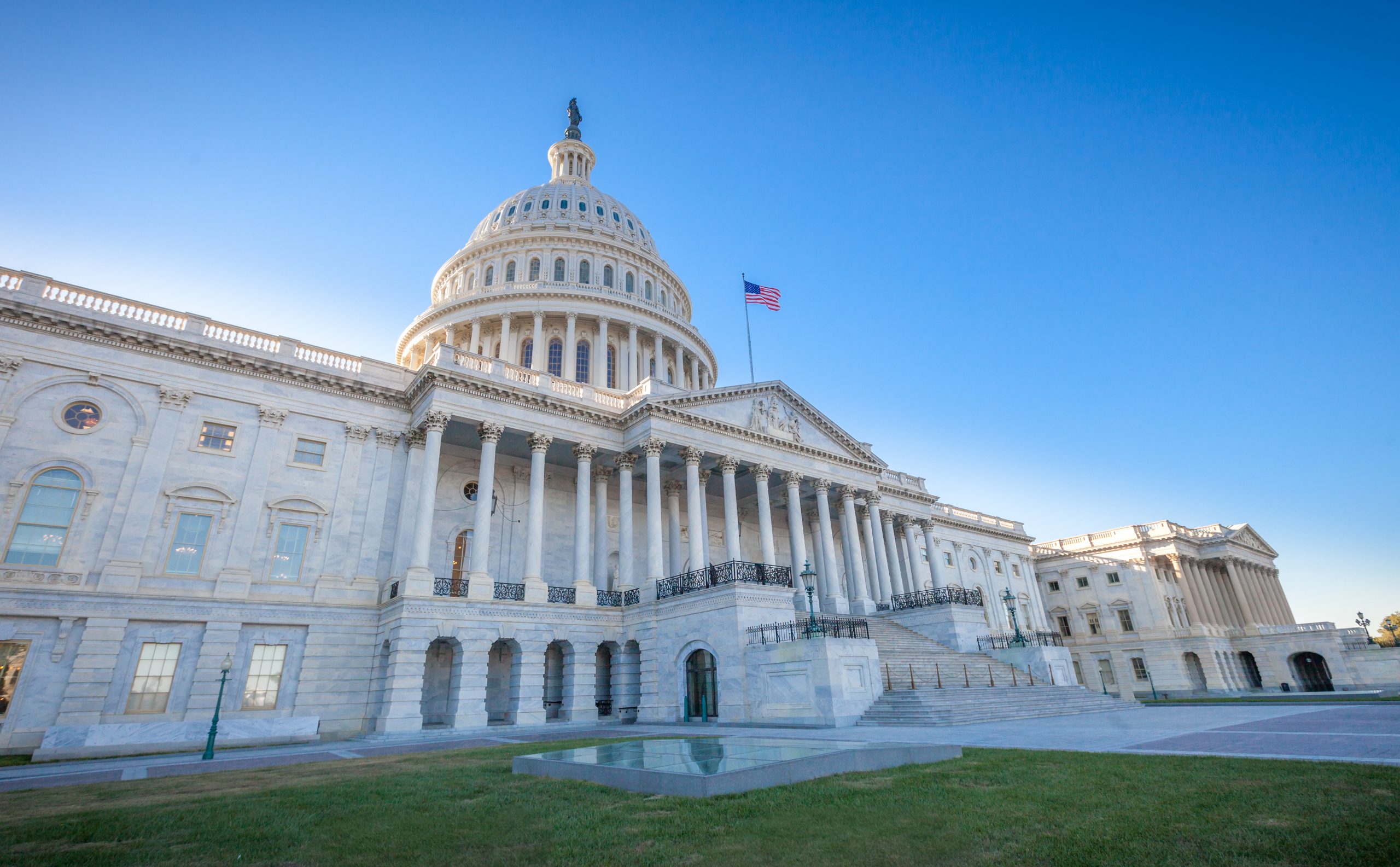
The government has paused all non-essential operations as of Oct. 1st without continuing resolution or appropriations legislation to extend funding.
While a continuing resolution that would fund the government at previous levels through November 21, H.R. 5371, was passed by the House of Representatives, it has failed to meet the required 60-vote threshold to pass the Senate. Central disagreements centered the extension of health care tax credits and language regulating recissions.
Government shutdowns hold far reaching effects for the human service sector and the communities we serve. While mandatory benefits, such as Social Security, continue, reimbursements for key social service programs risk being delayed.
States face a greater burden to stabilize funding if reimbursements are delayed. The Special Supplemental Nutrition Program for Women, Infants and Children (WIC) presents a critical challenge as it is currently funded by a contingency fund, but funding is not expected to sustain states for more than a few weeks. States may independently implement funding to safeguard the program and seek reimbursement once a continuing resolution is passed, but not all states are able to afford the cost.
Additionally, vouchers for Head Start, the Child Care and Development Block Grant, and Title IV-B are frozen until the government resumes its required funding levels.
USDA Terminates Future Household Food Security Reports
The U.S. Department of Agriculture issued a press release notifying that future Household Food Security Reports would be terminated. The Household Food Security Report provides annual data from national food insecurity surveys to offer insight into the ability of low-income households to access adequate nutrition.
HHS Publishes Notice of Proposed Rulemaking for Head Start Program Performance Standards
The U.S. Department of Health and Human Services issued a notice of proposed rulemaking to propose new provisions to the Head Start Program Performance Standards. The standards aim to increase pay and support the Head Start workforce, improve the overall quality of Head Start program services, and strengthen mental health support.
Sector Updates from the Judiciary
Federal Court Rejects Conditions Placed on Disaster Funding
The U.S. District Court for the District of Rhode Island permanently blocked the enforcement of conditions placed on emergency preparedness funds. Judge William Smith determined that the sudden requirements that grant recipients certify that they do not “operate any program that benefits illegal immigrants or incentivizes illegal immigration” and promises to “honor requests for cooperation” in immigration enforcement are illegal.
The verdict grants summary judgment to the plaintiff states, including Illinois, California, and New York.
The decision also arrived shortly after the U.S. District Court for the Northern District of California issued a preliminary injunction to prevent conditions from being placed on grant funds The order stated that the funds cannot be used to further goals related to racial preferences, the denial of “the sex binary in humans or the notion that sex is a chosen or mutable characteristic,” illegal immigration, or other “anti-American values.”
Reduction-In-Force Remain Paused for Certain HHS Subagencies
The injunction against further reductions in force for the Centers for Disease Control and Prevention, the Office of Head Start and regional employees, the Center for Tobacco Products, and the HHS assistant secretary for planning and evaluation’s Division of Data and Technical Analysis will remain in place. The U.S. Court of Appeals for the First Circuit upheld the lower court’s preliminary injunction preventing further reductions in force as litigation continues.
Shortly after, the First Circuit permitted the Department of Education to resume a planned reduction in force for its Office for Civil Rights, following a July Supreme Court order. The Supreme Court decision allowed the Department of Education to proceed with mass staff reductions.
Appeals Court Warns Mandatory Implicit Bias Training May Give Rise to a Race-Based Hostile Work Environment
The U.S. Court of Appeals for the Second Circuit determined that mandatory implicit bias trainings are not inherently illegal. However, the court warned that the trainings may give rise to a race-based hostile work environment claim if the training discusses a particular race “with a constant drumbeat of essentialist, deterministic, and negative language.”
Subscribe to the Policy and Advocacy Radar to receive our biweekly policy roundup, which includes commentary on issues in Social Current’s federal policy agenda, opportunities to take action, and curated news and opportunities.

About Social Current
Social Current is the premier partner and solutions provider to a diverse network of more than 1,800 human and social service organizations. Together with our network, we are activating the power of the social sector to effect broader systemic change that is needed to achieve our vision of an equitable society where all people can thrive. We support, strengthen, and amplify the work of the social sector in five core integrated areas including brain science and trauma-informed approaches; COA Accreditation; child, family, and community well-being; government affairs and advocacy; and leadership and organizational development.