Government Affairs and Advocacy
Jan. 26 Federal Update: House Passes Federal Funding Agreement
 Social Current
The federal government is currently funded through Jan. 30. Members of Congress have worked closely to reach funding agreements to extend federal funding through the end of the fiscal year on Sept. 30.
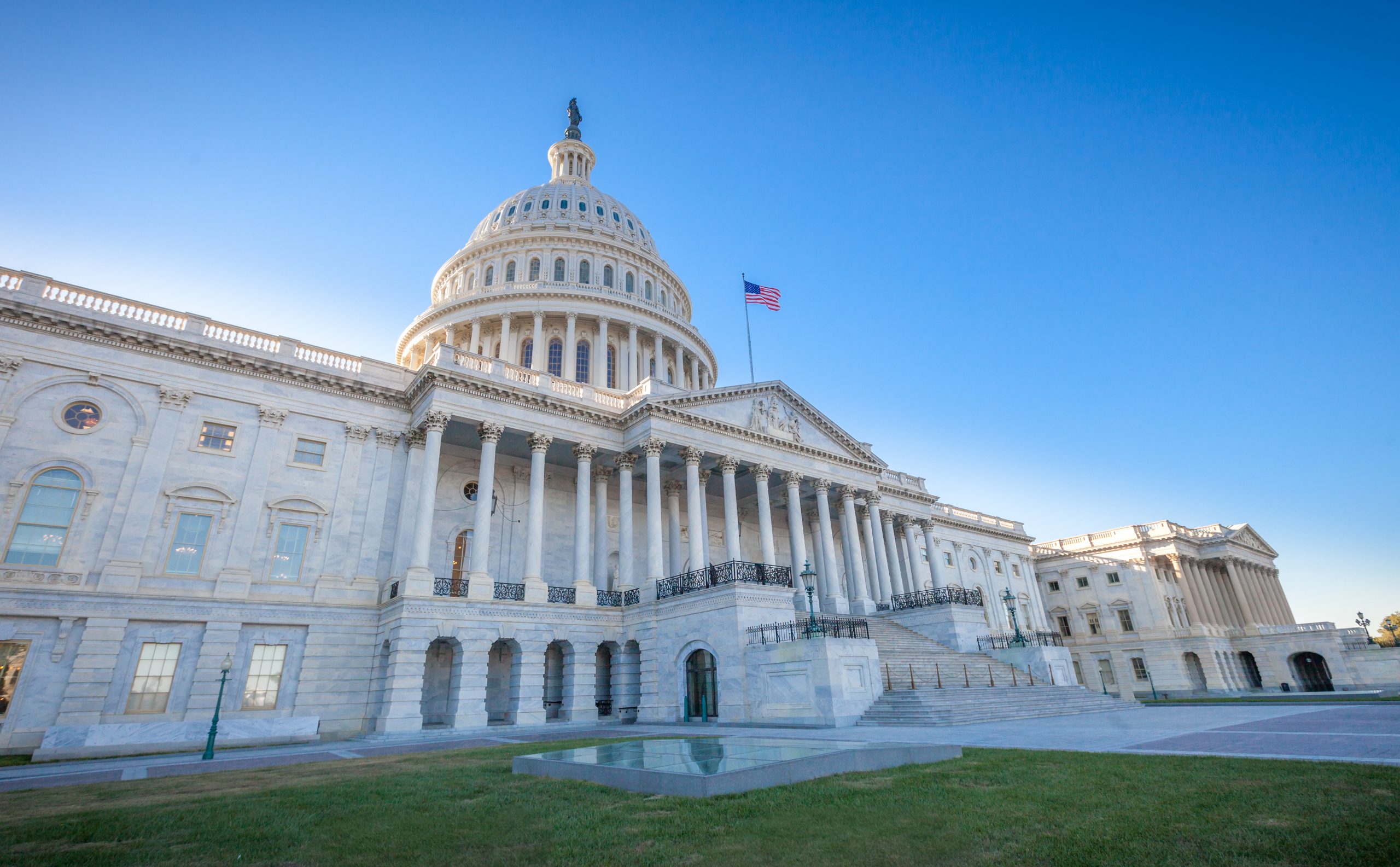
On Jan. 22, the House of Representatives passed a funding package, H.R. 7148, by a vote of 341 to 88. The bill provides funding for key agencies and essential programs, like the Temporary Assistance for Needy Families (TANF) program. If passed by the Senate, several agencies will experience notable funding increases.
- The Department of Housing and Urban Development: $84.3 billion, a $7.2 billion increase
- The Department of Education: $79 billion, a $217 million increase
- The Department of Health and Human Services: $117 billion, a $210 million increase
- The Department of Labor: $13.7 billion, a $65 million increase
Within the Department of Housing and Urban Development, homeless assistance grants will increase by $366 million compared to fiscal 2025. Additionally, the US Interagency Council on Homelessness would be required to be staffed in accordance with federal law.
Within the Department of Health and Human Services, the Low Income Home Energy Assistance Program formula grants and the Community Services Block Grant Act program would receive slight funding increases, compared to fiscal 2025. Head Start and the Child Care and Development Block Grant would each receive an $85 million increase, although refugee and entrant assistance programs would see a $1.2 billion decrease.
The bill also does not extend the expiring Affordable Care Act subsidies that significantly increased access to affordable health care through the Marketplace but does include health care provisions. The appropriations package extends certain public health programs, including Medicare telehealth flexibilities, and allocates $4.6 billion to community health centers.
In addition to funding, the bill includes language requiring the Department of Health and Human Services to report staffing levels to Congress, ensuring they retain sufficient staffing to fulfill their statutory responsibilities in a timely manner. Any reorganizations will need to be made publicly available to allow for an independent review. Notifications must be made at least 60 days before any steps are taken to begin the reorganization.
Alongside notice of agency reorganizations, the appropriations bill requires Congress to be notified at least three days before grant terminations are announced and before any restrictions are implemented that would delay the reimbursement of funds through the Payment Management System (PMS). The bill requires HHS to ensure that disbursements through PMS are processed within 5 business days. Any delays must be reported to Congress, along with an explanation of the circumstances.
For more information on the provisions within the appropriations bill, the Senate Committee on Appropriations has published a series of resources.
Department of Education Delays Involuntary Collections on Federal Student Loans
On Jan. 16, the U.S. Department of Education announced it will delay involuntary collections on federal student loans, including through Administrative Wage Garnishment and the Treasury Offset Program.
The decision arrives as the Department works to implement major student loan repayment reforms implemented through the recent budget reconciliation bill, H.R. 1, including through alternate payment plans.
For more information regarding expected changes to student loans, Social Current has published a comprehensive brief outlining critical provisions of H.R. 1.
Department of Labor Extends Deadline for States to Meet Employment Service Job Center Staffing Restrictions
On Jan. 21, the U.S. Department of Labor published a final rule that will delay the compliance dates states must meet when implementing the merit staffing requirements for Employment Service. The deadline is now Jan. 21, 2027.
The Employment Service is a core program of the Workforce Innovation and Opportunity Act (WIOA) that assists in American Job Centers nationwide. The rule intends to introduce greater flexibility to staffing options.
House Education Subcommittee Explores Opportunities to Grow Access to Affordable Child Care
On Jan.13, the Subcommittee on Early Childhood, Elementary, and Secondary Education held a hearing to discuss critical barriers to affordable child care. The representatives and witnesses highlighted the private sector’s important role and the need for innovation to meet families’ unique needs.
The hearing underscored the profound impact child care has on the economy. Recent research commissioned by Bright Horizons, a nonprofit that partners with companies to provide on-site childcare solutions, found that 67% of working parents feel forced to choose between focusing on their career or taking care of their family. Witnesses spoke to the importance of affordable child care in enabling parents to participate in the workforce and pursue higher education, sustaining economic stability for families and communities.
Recommendations to increase access to affordable child care included workforce incentives for employees, including the Employer-Provided Child Care Credit. Throughout, participants also stressed the importance of creativity and flexibility to permit innovation.
Work & Welfare Subcommittee Discusses Strengthening the Child Support Enforcement Program
On Jan. 21, the Work & Welfare Subcommittee held a hearing to discuss pathways to strengthen the Child Support Enforcement Program. The representatives and witnesses highlighted the critical role the Child Support program plays in promoting the financial well-being of children and families.
Chairman LaHood (R-Ill.) detailed its economic importance, noting that in 2024, states collected more than $25 billion in child support payments and served more than 11 million families, or 18% of all children in the U.S. Among families served, 24% had incomes below the poverty line.
Representatives and witnesses also underscored the need to modernize the program in light of a rapidly changing labor market and technological environment. The rise of independent contractors and aging technology and case-management platforms within states has fostered critical barriers.
Witnesses recommended coordinated employment services, including through court-ordered programs for parents who are unemployed or underemployed. Additional recommendations included increasing connections between parents and agency personnel to help families navigate the child support system and modernizing technological platforms and systems.
Sector Updates from the Judiciary
Appeals Court Approves the Denial of Medicaid Funds to Certain Abortion Providers
On Dec. 12, the United States Court of Appeals for the First Circuit overturned a lower court’s ruling, determining that a provision of H.R. 1 that denied Medicaid funds to certain abortion providers is constitutional.
H.R. 1 removed federal Medicaid funding from abortion providers that received more than $800,000 in Medicaid funds in fiscal year 2023, as well as any entities affiliated with the providers. The provision primarily affects Planned Parenthood and two separate organizations.
Previously, the U.S. District Court for the District of Massachusetts determined the law unconstitutionally targets Planned Parenthood and violates the First Amendment. However, the appellate court held that the law relies on Congress’ inherent taxing and spending power. Affected parties have the choice between receiving Medicaid funding and abandoning the provision of abortion services or refusing Medicaid funding and continuing to provide abortion services.
Wyoming Supreme Court Overturns Law Severely Restricting Abortion Access
On Jan. 6, the Wyoming Supreme Court found recently passed state laws restricting abortion access unjustifiably limit women’s state constitutional right to make their own health care decisions.
The lawsuit centered a 2023 law, Life is a Human Right Act, which prohibited the provision of abortions within Wyoming, with certain exceptions. It also addressed S.F. 0109, which criminalized prescribing, dispensing, distributing, selling, or using any medication to perform an abortion.
The lawsuit was brought by medical providers, patients, and organizations, who argued that the laws violated individuals’ right to make health care decisions. They referred to a 2012 amendment voters passed, enshrining the right of health care access.
As a result of the verdict, abortion will now become legal in Wyoming. The justices stressed the fundamental right of every competent adult to make their own health-care decisions.
Federal Court Requires HHS to Pause DEI Grant Conditions for Head Start Program Funds
The United States District Court for the Western District of Washington halted recent actions to restrict Head Start’s diversity, equity, and inclusion efforts and issue mass layoffs at the Office of Head Start. The order applies to programs nationwide.
The lawsuit was filed after the Office of Head Start notified providers that federal funding for training, technical assistance, and other program expenditures to promote or participate in diversity, equity, and inclusion initiatives will not be approved. The lawsuit also addressed the closure of half of Head Start’s regional offices and mass reduction-in-force.
Plaintiffs detailed the significant challenges providers faced in accessing needed funding, endangering vital access to early childhood education for nearly 750,000 infants, toddlers, and preschool children nationwide.
Judge Ricardo S. Martinez Chambers issued a preliminary injunction, temporarily prohibiting the Department of Health and Human Services from imposing grant conditions that require recipients of Head Start program funds to certify that the cash will not be used to promote diversity, equity, and inclusion.

About Social Current
Social Current is the premier partner and solutions provider to a diverse network of more than 1,800 human and social service organizations. Together with our network, we are activating the power of the social sector to effect broader systemic change that is needed to achieve our vision of an equitable society where all people can thrive. We support, strengthen, and amplify the work of the social sector in five core integrated areas including brain science and trauma-informed approaches; COA Accreditation; child, family, and community well-being; government affairs and advocacy; and leadership and organizational development.