COA Accreditation
COA Accreditation Volunteer Spotlight: John Prior
 Social Current
Through COA Accreditation, a service of Social Current, we seek to empower organizations to implement best practice standards to improve service delivery and achieve better outcomes for individuals and communities. COA Accreditation provides a framework to help organizations manage resources, incorporate best practices, and strive for continuous improvement.
We believe there is rich expertise in our field, so we ground the COA Accreditation process in our human and social services community. Our volunteer peer reviewers conduct our site visits and finalize accreditation decisions.
We are proud to spotlight the latest Volunteer of the Quarter: John Prior
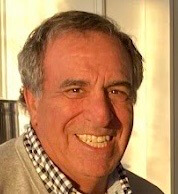
About John Prior
After graduating from Niagara University in 1975, I started my career as a recreational worker, and then progressed to become a direct care worker, cottage chief, and supervisor. I graduated with my master’s in social work from SUNY Stony Brook in 1982. That same year, I went on to become a therapist at Beech Brook in Ohio, where I provided individual and family therapy in residential and community settings. I later worked at Children’s Home and Aid Society of Illinois in Chicago and Naperville Community Outreach in Illinois, where I served as executive director.
I became familiar with COA Accreditation in the late 1990s with my association with Harris County Protective Services for Children and Adults (HCPSCA) in Texas. Initially, I was consulting with HCPSCA to develop new programs and services to respond to the needs of abused and neglected children. In 2000, the HCPSCA executive director asked me to assist them in developing a response to the new quality improvement (QI) standards from COA. In 2004, HCPSCA institutionalized its QI/PQI efforts by establishing its program improvement team, and I served as team leader. In 2014, I began serving the Catholic Charities of the Archdiocese of Galveston-Houston as director of quality and compliance. This included operation of their PQI program, strengthening of performance goals and data collection capacities, and contract compliance.
Q&A
Who is your role model?
This is a tough one, as I have many people I admire during my journey. My parents were kind and caring people who ran the local grocery store in a small town in New York. It’s amazing how that small store was in a place for the community to not only buy groceries, but also where people shared their life stories, the good, the bad, and the ugly. My parents responded with kindness and support when others experienced tough times. I saw foundational social work values intermixed with the running of a small, successful family business.
Professionally, I was quite fortunate in the early years of my career to have some exceptional supervisors as my role models. John Langseder and Fred Steffen were two supervisors who not only provided me with practical skills and supervision, but also perspective on how to approach the work with clients and colleagues with respect and dignity. As John and Fred would often say: Regardless of your degree or training, the one tool everyone in this field shows up to work with every day is ourselves. In my opinion, knowing how to integrate that professional knowledge with one’s own unique strengths is the sign of a truly professional social worker.
What led you to become a COA Accreditation Volunteer?
While a department of a public county entity, Harris County Protective Services for Children and Adults (HCPSCA) has been COA-accredited for many years. They were accredited long before the standards for public organizations were even developed. When the quality improvement standards (later changed to PQI) were published, I was doing consulting work for HCPSCA in program development. Their executive director asked me to delve into these standards and suggest some ways they could be implemented within their organization. My work with them resulted in their developing a dedicated team to implement PQI throughout the entire department. As that team’s leader, it was clear to me that becoming a COA Accreditation peer reviewer would greatly strengthen my knowledge and understanding of the standards and that knowledge would greatly benefit the organization and my own professional development.
What are your strongest beliefs about the value of COA Accreditation?
In building a PQI system from the ground up at a multiservice public organization, I saw firsthand how the COA Accreditation standards provide a sound foundation for program development and implementation for the entire organization. At HCPSCA, some programs had to comply with state licensing or regulations, but other programs had no such guidance beyond contract requirements (which were mostly financial reporting) or staff knowledge and experience, which varied program to program. The COA Accreditation standards provided a common platform for us to develop a better understanding of our work across all program services. This included providing a common approach, expectations, and language for the organization to develop and implement its programs, evaluate performance, and achieve organizational excellence.
What excites, surprises, and/or challenges you the most about the work you do as a COA Accreditation peer reviewer?
I always say during site visits’ entrance meetings that I truly enjoy meeting good people doing great work in their communities. COA Accreditation and the network of accredited organizations are filled with those kinds of people and great organizations that support their dedication and commitment. I see it all the time on each of my site visits!
Share a memorable place, person, or experience from a site visit.
On one site visit several years ago at a residential treatment facility, I met a 19-year-old young woman who was following us around during the facility tour. I struck up a conversation with her and learned she was a resident and waiting for placement in an adult facility. However, due to the nature of her needs, finding an appropriate placement was proving difficult. Everyone was frustrated with the situation. She asked if she could follow along on the tour, and staff agreed that she could join us. As she and I continued our conversation, she shared how she “hated” the place, but my observations were quite different. As we came across staff throughout the tour, she demonstrated all the characteristics of having strong personal, healthy, therapeutic bonds with staff. It was evident to me that those relationships with staff were important to her. Staff clearly demonstrated a level of care that was nurturing, meaningful, and therapeutic in nature. For me, this was a clear example of my premise of finding good people doing great work.
What advice would you give someone interested in being a COA Accreditation volunteer peer reviewer?
Being a peer reviewer undoubtedly benefits your organization. Being able to observe how others approach the standards is an enlightening experience for me. I have always found that COA Accreditation reviews are a great source of new ideas to bring back to my organization.
More so, being a peer reviewer is a tremendous source for professional and personal development. COA Accreditation reviews are a constant source of real-life learning opportunities for me, even now that I am retired.
Learn more about how to become a peer review volunteer and apply online.

About Social Current
Social Current is the premier partner and solutions provider to a diverse network of more than 1,800 human and social service organizations. Together with our network, we are activating the power of the social sector to effect broader systemic change that is needed to achieve our vision of an equitable society where all people can thrive. We support, strengthen, and amplify the work of the social sector in five core integrated areas including brain science and trauma-informed approaches; COA Accreditation; child, family, and community well-being; government affairs and advocacy; and leadership and organizational development.