
Human services professionals are on the frontlines working to support individuals and families across the lifespan with nuance and empathy. That sensitivity and care is critical because the stakes for communities are high—which may also be why some are surprised to hear that artificial intelligence (AI) is being adopted in the human services sector.
Dr. Lauri Goldkind, professor at Fordham University and guest speaker at Social Current’s 2025 CEO Convening, is a social work expert and researcher who has extensively explored AI’s potential to impact human services. Her 2021 article, Social Work and Artificial Intelligence: Into the Matrix, reveals critical considerations for the future of the sector. Learn more from our summary below and access the full text of the article through the Fordham Research Commons.
What Place Does AI Have in Human Services?
The term AI is vague on its own—it’s used to describe several different tools, intended for specific uses, like facial recognition, data analysis, or speech comprehension. Today’s AI tools are not advanced enough to fully replace the work of individual people, rather, AI is a tool that works best when used to enhance—not replace—human expertise.
The implications are huge. This means that professionals and organizations can effect change on a scale not previously possible. As Goldkind articulates in her article, it’s already transformed human services work significantly:
- For Individuals: AI-powered virtual counselors can give mental health support to people who can’t access human therapists. These virtual counselors use facial expressions, body language, and speech to act like humans. Early results show they can help people stay on track with their treatment.
- For Organizations: AI can help social service agencies work smarter. For example, predictive analytics can look at data to figure out which clients need the most help. One food pantry used AI to predict who was at risk of food insecurity, so they could step in before things got worse.
- For Systemic Problems: AI can tackle large-scale issues through data collaboratives—where organizations share data to solve problems. For example, the Chicago Data Collaborative combines data from police, courts, and jails to give a clearer picture of the criminal justice system. This info helps journalists, researchers, and activists push for change.
AI offers a lot of opportunities for the work, but is it too good to be true?
Preventing Potential Harm
While AI has a lot of potential, it also comes with risks. As Goldkind notes, one of the top threats in human services work is individual bias. Even under the best circumstances, professionals may have unconscious biases that affect how they interpret information or make decisions. While AI itself doesn’t have biases, people who create it and the data it uses still reflect real-world inequalities. This naturally raises ethical concerns, especially when AI is used in areas like criminal justice or child welfare.
For this reason, Goldkind believes the best outcomes for AI in these applications start before they are built: “As a values-centered profession with a robust code of ethics, social work is uniquely positioned to engage across disciplines to inform the creation of thoughtful algorithmically enhanced policy and practice at all levels.” Collaboration between tech and human services then becomes a critical symbiosis—providing long-term support to workers and protecting the needs of vulnerable communities.
Read the full-text article online.
CEOs: Learn More From Dr. Goldkind
At this point AI’s place in the industry is cemented, it has filled significant gaps in the system and provides speedy results to cumbersome work—there is no going back. Yet we are only at the beginning of AI’s widespread implementation.
Familiarity with AI is necessary to remain competitive and relevant in today’s work, and future leaders will be expected to understand it well. That’s why we’re excited to have Dr. Goldkind as a guest speaker at Social Current’s 2025 Convening for Chief Executives, where human services CEOs will learn from peers and other experts about the latest innovations in the field. Register now to join us March 19-20 in Charlotte, North Carolina.
Executives and Senior-Level Managers: Learn More at the Executive Leadership Institute
Social Current’s 2025 Executive Leadership Institute, held in partnership with Loyola University Chicago’s Quinlan School of Business, provides foundational leadership training and addresses hot topics, including AI in human services.
Learn more about this year’s program, which includes a weeklong event June 8-12 in Chicago, as well as a year of virtual learning, mentoring, and support with self-designed projects that address organizational challenges.
As the social sector enters 2025, it faces an evolving landscape of both tremendous opportunities and significant challenges. Emerging technologies, particularly artificial intelligence (AI), offer the potential to transform organizations by driving productivity and efficiency. However, these advancements also bring important considerations around responsible deployment and risk management.
To help leaders navigate this shift, Social Current’s Knowledge and Insights Center has curated a report on key trends shaping the sector in 2025, offering actionable strategies to stay ahead. From leveraging AI to managing its ethical implications, this article explores how the social sector can harness technology while staying grounded in its human-centered mission.
Social Current is committed to fostering collaboration among sector leaders to address systemic challenges and seize new opportunities. At our Convening for Chief Executives in North Carolina, March 19-21, we’ll discuss strategies for integrating emerging technologies into the sector.
Lauri Goldkind, professor at Fordham University, will lead an interactive session to co-create an AI readiness assessment rubric, a practical tool to help organizations prepare for AI implementation. Goldkind’s research focuses on data justice, AI in nonprofit management, and telemental health. The session will provide leaders with actionable insights on integrating AI responsibly into human services, ensuring its positive impact while minimizing risks.
Leveraging AI
Social sector organizations are using AI to automate routine functions, gain organizational insights, and increase productivity.
Adoption of AI is surging. A recent McKinsey & Company study reveals that 72% of surveyed organizations are using AI to support at least one business function. In the social sector, organizations report using AI to assist with tasks such as writing personalized donor thank you notes, crafting newsletters, drafting grant proposals, and developing press releases. Across all sectors, AI is commonly used to support IT, HR, marketing, sales, and product/service development functions. Considering staffing shortages, nonprofit organizations can use AI to automate manual tasks in order to free up space for staff to focus on more complex tasks such as problem solving and relationship-building.
Risk Management
While capitalizing on innovative technologies, nonprofits must remain human-centered and mitigate risks such as algorithmic bias, cybersecurity risks, and privacy risks.
Even with its many benefits, AI adoption should be approached strategically and with a healthy dose of risk modeling and mitigation. Take the time to teach your teams how AI works and to understand the body of data that your AI tools train on. Generative AI programs are generally trained on open-source information like Wikipedia, Twitter, and Reddit that can contain heavily biased views and can exacerbate algorithmic bias and disparate outcomes. Some conversational AI tools, such as the free versions of ChatGPT, have time delays and train on data with a currency lag of up to two years, which can cause issues for fields that need highly current information. Additionally, data privacy and cybersecurity concerns should be top of mind for nonprofit professionals using AI.
If you haven’t already, begin drafting AI use-case policies for your workplace that protect user data. 2025 is a great time to identify how to ethically and effectively optimize AI at your organization.
Social Current is Here to Help Navigate Changes
As the social sector continues to adapt to the evolving landscape, the responsible integration of AI offers both significant opportunities and challenges. By adopting a strategic, human-centered approach to AI, organizations can unlock productivity gains while safeguarding against risks such as bias, privacy concerns, and cybersecurity threats. At Social Current, we are committed to supporting leaders in navigating this complex terrain.
In addition to our Convening for Chief Executives, we invite leaders to join us at the 2025 Executive Leadership Institute (ELI). Held in partnership with Loyola University Chicago Quinlan School of Business, ELI helps participants enhance their leadership skills and gain valuable insights into emerging trends in technology and organizational development. These programs are opportunities for learning, collaboration, and strategic planning to help ensure AI and other innovations are used ethically and effectively in the social sector.
Nonprofit leaders face challenges at some point, regardless of their field. Changes in policies, funding, or the needs of the organization can happen suddenly. During uncertain times, staff and community members look to their leaders for support, guidance, and reassurance that they can overcome these challenges. This is when adaptive leadership skills are needed the most.
What is Adaptive Leadership?
Adaptive leadership consists of skills that help individuals stay focused when there are no clear answers or easy solutions. These leaders are open minded and quick thinkers who respond to change and emerging challenges confidently. Instead of sticking to fixed plans or abandoning plans when conditions change, adaptive leaders remain flexible, incorporate various viewpoints, and try new solutions.
Organizational resilience starts with adaptive leadership. It’s common for changes in policy, economics, technology, and industry innovations to disrupt expectations and require organizations to respond. That’s why leaders across all sectors must be prepared to meet challenges effectively and why we emphasize adaptive leadership skills as part of our annual Executive Leadership Institute.
Putting It Into Action
Principles of adaptive leadership offer a framework for handling complex and difficult situations when clear solutions aren’t present. These principles help leaders and organizations adapt and succeed in changing environments:
- Getting on the balcony means stepping back to gain a broader view of the situation. It involves noticing what’s happening with yourself, your team, your organization, and external factors affecting you.
- Identifying the leadership challenge: To find clarity amid uncertainty, you first need to determine the nature of the challenges you’re facing.
- Experimenting and taking smart risks: Stay open to new ideas and be willing to try different approaches based on the facts you have.
- Empowering others: You don’t have to tackle everything by yourself. Involve your team and share the workload.
- Leveraging conflict: Disagreements and varying perspectives can lead to valuable learning and innovation.
- Anchoring leadership in purpose: In stressful situations, it’s easy to lose focus. Stay grounded in your overall goals to guide your actions.
The principles are interconnected and reinforce one another. For instance, “getting on the balcony” helps you identify the leadership challenge, which can inform your experiments and risk -taking. Empowering others allows more individuals to contribute to the adaptive work, while leveraging conflict can uncover new ideas.
Practices
Alongside these principles, adaptive work involves various practices that can help you succeed:
- Diagnosing the Organization/System: Understand how your organization works and identify areas for improvement.
- Regulating Distress: Manage your emotional responses to difficult situations and maintain your composure.
- Maintaining Disciplined Attention: Focus on the most pressing issues.
- Giving the Work Back to the People: Empower team members to take ownership and find solutions.
- Protecting Voices of Leadership from Below the Hierarchy: Ensure that diverse perspectives are heard, regardless of level within the organization.
Staying Prepared
Practicing adaptive leadership is just as crucial as understanding its principles. When engaged in a difficult situation, stress and time constraints can make it hard to recall this information. The program provides Leaders with continuity of practice and application of adaptive leadership techniques to sharpen their skills. Here are some methods:
- Case Studies: Stay updated on how similar organizations handle unexpected changes. Reviewing these cases can reveal valuable leadership lessons. Done through student cohorts using Social Current’s online learning community.
- Simulations: Run practice scenarios to develop your decision-making skills and identify strengths, weaknesses, and potential outcomes in a less stressful environment. During virtual convenings, students have opportunities to apply adaptive skills to situations experienced across the sector.
- Role-playing: Engaging in role-play helps you practice communication and manage tough conversations. Group exercises support experiential learning while reinforcing the importance of feedback.
- Personal Reflection: Think about how you’ve responded to unexpected changes in the past. Reflecting on your experiences can help identify areas for improvement and effective strategies to apply. Self-awareness is essential to leadership development
Executive Leadership Institute
Adaptive leadership is a core component of Social Current’s Executive Leadership Institute (ELI), which is held in partnership with Loyola University Chicago’s Quinlan School of Business. Over the course of the program, leaders grow their knowledge and skills to effectively manage day-to-day operations and prepare for future challenges and changes.
Executives and senior managers learn how to lead more effectively in an ever-changing environment through a combination of academic instruction, real-world projects, mentorship. This year’s institute will be taking place June 8-12 in Chicago. Learn more about the institute online and register to join us at our informational session.
Further Reading:
- The Practice of Adaptive Leadership: Tools and Tactics for Changing Your Organization and the World
- Leading with Resilience: Mastering the Art of Adaptive Leadership in the Modern World
- Thomas Huber, PhD MS ECS
The mentorship program offered as part of Social Current’s Executive Leadership Institute (ELI) plays a pivotal role in developing transformative leaders. By pairing seasoned leaders with emerging talent, ELI creates a unique, supportive environment where knowledge sharing, personal growth, and professional development converge.

For this article, we asked an ELI mentor pair to share their experiences and shed light on the significant impact of their relationship on the broader leadership learning process. Mentor Kevin Walsh is a retired executive with 43 years of experience in child welfare, mental health, and juvenile justice in New York State, and mentee Althea Birch is the director of community programs at The Advocate Program in Miami.
Complementing On-Site Learning Through Mentorship
For many ELI students, the week of onsite learning is the foundation of their leadership journey. However, it is the mentoring component that provides the essential bridge to real-world application. According to Walsh, the in-person experience and additional virtual learning are crucial for providing a theoretical framework on leadership, but the program’s true value emerges when participants are encouraged to translate these lessons into action.
“While the onsite sessions provide critical insights into the challenges facing leadership today, working with a mentor allows the mentee to apply these concepts to real situations within their own organization,” Walsh explains. For example, Birch embarked on a project to expand her organization’s board of directors to include a member with lived experience. With Walsh’s guidance, this goal became not just a theoretical exercise, but a transformative action which reshaped Birch’s organization.

The focus on action-based learning is what sets ELI apart. Each student works on a project that requires them to implement the skills and insights they’ve gained, with their mentor acting as a neutral, experienced guide. “The mentor’s role is to help the mentee reflect on the challenges they face, not to solve the problem for them,” explains Walsh. This reflective process, which is central to adult learning, allows the mentee to deepen their leadership practice and approach issues from new perspectives.
Mentorship as a Personal Development Journey
Mentorship within ELI is not just about professional growth; it is deeply intertwined with personal development. The mentor shares their expertise and helps the mentee work through their leadership challenges. As Walsh highlights, “Mentoring is about guiding the mentee on a personal journey toward becoming a stronger leader.” This means fostering a space where mentees can think critically, voice their concerns, and reflect on their growth.
For the mentees, the experience is equally impactful. “Kevin was an unbiased sounding board,” says Birch, reflecting on the mentorship experience. “His guidance helped me make better leadership decisions.” The mentor-mentee dynamic offered Birch a chance to step back and analyze her leadership style, without the pressures of a supervisor-employee relationship. This created a safe space for reflection and growth.
Benefits to Both Mentor and Mentee
While mentorship is primarily focused on supporting the mentee’s development, mentors also benefit significantly from the experience. For Walsh, the chance to work with mentees has kept him engaged and connected to the evolving trends in the nonprofit sector. “I am constantly learning from my mentees,” Walsh shares. “Working with individuals facing different challenges keeps me sharp and connected to the changing landscape of leadership.”
For the mentee, the benefits are clear: Continuous support, expert guidance, and an opportunity to learn from someone who has walked the path before. “Kevin’s nonprofit leadership experience gave me a wealth of guidance,” Birch shares. “He helped me understand that even small accomplishments matter in leadership, and he gave me the encouragement to keep moving forward.”
Overcoming Challenges Together
Like any relationship, the mentor-mentee partnership can face challenges. Walsh reflects on early struggles with understanding the fine line between coaching and mentoring. “It was difficult at first to resist the urge to offer advice on how to solve problems,” he admits. “But the true role of a mentor is to help the mentee reflect, not provide direct solutions.” With practice and support from other mentors in ELI’s alumni community, Walsh honed his active listening skills, ensuring that he could better guide Birch’s self-reflection.
For Birch, challenges were minimal, but the consistency of open communication was key. “Kevin was always available and supportive,” she explains. “Even between our scheduled meetings, I knew I could reach out if I needed guidance.”
A Lasting Impact
Perhaps the most powerful aspect of the ELI mentorship program and the institute overall is the longevity of relationships with peers and advisors in the sector. The connections formed during the program do not end when students graduate from the institute. As Birch shares, “I know I can continue to reach out to Kevin throughout my leadership journey.” This enduring support is what makes ELI’s mentoring approach unique — it is not just about guiding participants during the course, but about establishing a lasting partnership for continued growth.
Learn More About the Executive Leadership Institute
The mentor-mentee relationships forged through ELI are more than just professional connections—they are partnerships that nurture personal growth, challenge assumptions, and develop leadership skills. These relationships provide a critical complement to the in-person and virtual learning experience, offering mentees the chance to apply new concepts in real-world settings while growing as leaders.
View details online for the 2025 Executive Leadership Institute, to be held June 8-12 at Loyola University Chicago.
To learn more about how you can develop your leadership skills and make a lasting impact, join our free informational webinar about the institute Feb. 20.
Social Current’s Knowledge and Insights Center is now offering access to the Next Big Idea Club. This virtual book club, curated by bestselling authors Malcolm Gladwell, Adam Grant, Susan Cain, and Daniel Pink, delivers the most important nonfiction books of the year. Through our online forum, you can dive deep into impactful ideas with 45-minute audio and video lessons. These lessons distill the essence of groundbreaking books, offering you a comprehensive understanding in a fraction of the time.
Social Current’s access includes highlights from the Next Big Idea Club’s collection of books, with a particular emphasis on:
- Workplace relationships
- Workforce resilience
- Improved communication and interpersonal connection
- Authentic approaches to diversity, equity, inclusion, and belonging
In this forum, featuring lessons from the books below, you’ll learn strategies and techniques that improve relationships with coworkers, clients, community members, and partners, in addition to your personal relationships away from work.
- High Conflict: Why We Get Trapped in Conflict and How We Get Out by Amanda Ripley
- Uncensored: My Life and Uncomfortable Conversations at the Intersection of Black and White America by Zachary Wood
- You’re Not Listening: What You’re Missing and Why It Matters by Kate Muphy
- No Hard Feelings: The Secret Power of Embracing Emotions at Work by Liz Fosslien and Mollie West Duffy
Access to the Next Big Idea Club is an exclusive benefit for Social Current Impact Partners.
Learn more about the benefits of becoming an Impact Partner online and by joining an upcoming informational webinar.
How to Access
Go to Next Big Idea Club: Better Relationships In and Out of the Workplace.
Social Current Impact Partners can access these lessons for free by logging into the hub. Log in to your existing account or create one if you are a new user. Once logged in, check out the resources list and click on the individual records to view.
Learn more about the Social Current Knowledge and Insights Center.
2024 will mark the fourth year Juneteenth is recognized as a federal holiday, and an increasing amount of employers are including it on their holiday calendars. In 2021, just 9% of employers had made Juneteenth a paid company holiday. That jumped to 33% in 2022 and rose again to 39% in 2023, according to a report by Mercer.
In addition to honoring Juneteenth as a paid holiday, organizations can recognize it with dedicated time for education and connection. Some resources with ideas and inspiration include:
- National Museum of African American History and Culture 2024 theme: Freedom, Movement, and Migration
- How to Celebrate Juneteenth This Year, By Chelsea Candelario, PureWow
- Remembrance, Reflection, And Celebration: How To Celebrate Juneteenth At Work In 2024, Vantage Circle
- 25+ Juneteenth Ideas for Work, by Akila McConnell, Unexpected Virtual Tours
- 16 Juneteenth Celebration Ideas for Work, teambuilding
- Celebrating Juneteenth and Continuing to Work in Solidarity for Racial Justice, Equality, and Equity, America’s Charities
Although recognizing Juneteenth is one step toward promoting equity, diversity, and inclusion (EDI), organizations should look to create an EDI-enriched organizational culture in meaningful and strategic ways as well.
“It is good to see that more organizations are now closing their offices for Juneteenth, but it’s not enough. To truly move the needle, leaders should be assessing their organizations and looking for how they can support their employees and communities in more substantive ways that meaningfully address inequities,” said Undraye Howard, vice president of equity, diversity, inclusion, and engagement at Social Current.
Comprehensively addressing EDI is a powerful strategy for increasing belonging and is inextricably linked to foundational pillars of workforce resilience, including psychological safety, creating space for difficult conversations, and increasing brain science awareness.
However, if an organization doesn’t have a plan or a multilevel commitment from staff, efforts can fall short and negatively impact staff engagement and morale. In a recent report released by WebMD Health Services on Diversity, Equity, Inclusion & Belonging: Uncovering What Employees are Offered, Want and Need, 62% of workers surveyed say Diversity, Equity, Inclusion & Belonging (DEI&B) programs aren’t effective, and nearly half (46%) say the programs had failed them personally.
To help equity efforts gain momentum and have lasting impact, Social Current recommends that organizations address it at the individual, organization, and systems levels. In addition, it is critical to engage all staff as important in this work, but also create measurable goals and clear accountability.
Effective Strategies for Advancing Equity and Workforce Resilience
Given that most organizations are feeling the strain of shrinking resources, increasing costs and demands for services, and significant workforce challenges, concurrently addressing equity and workforce resilience is strategic and increases the potential for impact. Organizations must partner with staff and prioritize advancing equity as core to how they look to advance workforce resilience.
“Nurturing a positive and supportive culture that aligns with our values does not happen overnight. Learning and building capacity around the concepts and interconnected strategies for EDI and workforce resilience, developing individualized plans, and putting plans into action and course correcting along the way is the surest way to make progress toward their goals,” said Karen Johnson, director of the Social Current Change in Mind Institute. “This work requires us to be innovative, curious, and courageous, but it is doable, and our workforce is worth the investment.”
Free Resources from Social Current
How organizations can help their staff to support their coworkers of color:
- Impact Partnership Spotlight: Equity, Diversity, and Inclusion. (free webinar June 24 at 3 p.m. ET)
- Uncovering the Traps of Implicit Bias. (on-demand webinar)
- Psychological Safety and Equity, Diversity, and Inclusion: How Embracing Discomfort Leads to Growth. (on-demand webinar)
- Black Women in Leadership Presents: It’s All Good…But It’ Not. (on-demand webinar)
- Are We Ready to Confront the Nonprofit Racial Leadership Gap? (on-demand course)
- Special Juneteenth Reading List. This reading list was curated by librarians in Social Current’s Knowledge and Insights Center.
Impact Partner Exclusive
- Advancing Equity Resource Collection. (Impact Partners should log in to the Hub to access the Knowledge and Insights Center.)
In-Depth Training and Networking Opportunities
- SPARK 2024 In-Person Event. This conference, Oct. 2-22 in Denver, will have a dedicated track for EDI, as well as a pre-conference session Oct. 20 that delves into how to navigate our polarized environment and sustain practices over time.
- Advancing Equity Workshop: Fundamentals to Support Your Journey. This three-part virtual workshop, July 9, 16, and 25 and Nov. 6, 13, 20, will provide a safe environment for participants to explore their relationships with EDI, gain strategies for promoting an inclusive workplace culture, and learn about the systems that impact us all.
- Save the Date: EDI Essentials for Supervisors. Using EDI principles as the foundation, this virtual learning series will help supervisors support and engage their teams. Sessions are July 31, Aug. 14, Sept. 18, and Dec. 4.
- Save the Date: Translating EDI Practice Into Action. This virtual learning series is designed for staff who are leading their organizations’ EDI efforts and want to grow their understanding and application of key EDI concepts. Sessions are Sept. 9, Sept. 24, and Oct. 1.
Advancing equity takes sustained commitment from leaders and organizations and at the same time, needs to begin somewhere. This Juneteenth, affirm your commitment to your workforce and advancing EDI.
Many social sector organizations are facing staffing challenges and tight budget constraints. For leaders striving to hold on to their organizational commitment to equity, diversity, and inclusion (EDI), keeping the work going can feel like navigating hurdle after hurdle.
Amid the ebbs and flows in support for EDI in the workplace, staff capacity is a constant factor. In our work at Social Current, we have seen that the organizations that are able to successfully advance equity over the long term pay attention to the time and resources needed to achieve their goals. They also allow provide the flexibility and support their staff need to thrive.
Some strategies for managing through times of reduced capacity include:
Adapt Your EDI Goals and Action Plan
Review your goals for the year and for the longer term. Which are already embedded into existing work and job responsibilities? Make sure to capture their progress. Identify the strategies and tactics that will require a significant lift from your committee or new resources and revise your plan to reflect the reality of your staff capacity and existing commitments. It’s better to prioritize and reduce the number of goals for the year than to risk burnout by asking people to take on more than is feasible.
Keep Goals Aligned and Focused
It’s often easier to give up the difficult work and keep the bare minimum going during times of low capacity. When identifying core goals to focus on for the year, choose what’s most important, the ones that address root causes of your biggest challenges. This may look like:
- Pausing your EDI newsletter and quarterly brown bag discussions in favor of implementing your staff professional development plan.
- Eliminating subcommittees or discussion groups to engage staff members in conducting your program equity audit.
- Prioritizing learning for staff members on topics/issues they’ve identified as critical, holding off on implementing other action items until core training is complete.
Be sure to consider the data on your organization’s current needs and readiness when making choices. Identify the leverage potential of each strategy and create a balance that allows you to continue making progress toward embedding EDI over the long term.
Strengthen Your Committee Structure
It’s important not to relegate implementation of the organization’s EDI goals to one or two people, even during lean times. Committees are a proven strategy for maintaining momentum over the long term. It’s important to build a network of staff EDI champions and increase the diversity of voices when making decisions. Committees also serve as an important anchor for your champions, as well as the skeptical, to see the continued commitment to your stated EDI goals and values.
Communicate Progress and Challenges
Transparency is critical for shifting the organization’s culture to embed EDI values and practices. Report to staff on the changes made to the EDI plan, the goals that will be prioritized, and the reason for the shifts. Follow up with regular reports on the data so that staff can see the progress made.
Additional Resources and Support
- Guide to Creating an Effective Equity, Diversity, and Inclusion Committee: If your committee needs support or could benefit from a review of structure, download Social Current’s free guide on effective EDI committees. It includes recommendations for a committee’s purpose and authority, size and makeup, and troubleshooting common committee challenges.
- Virtual Training: Advancing Equity Workshop: Fundamentals to Support Your Journey, offered in July and November, is a three-part training to help you advance your personal EDI journey, build an inclusive workplace culture, and become more aware of the systems that impact us all.
- Customized Consultation: Social Current’s experienced staff can help you jumpstart your efforts or troubleshoot challenges, which could save you time and money in the long run. Our services can be tailored to your organization’s specific needs.
Throughout Social Current’s decades of partnering with social sector leaders to advance equity, diversity, and inclusion (EDI), we have seen support for this work ebb and flow. However, we believe we are at a critical moment for this work. Last year’s Supreme Court decision on affirmative action was a significant blow to EDI efforts, with thousands of EDI executives leaving or losing their jobs. Today, we continue to face ever-increasing polarization and preemptive efforts to roll back EDI policies.
Phyllis Richards and Jerica Broeckling, who provide Social Current’s EDI training and facilitation services, recently published an article on this topic in Nonprofit Business Advisor. In it, they outline why, despite ongoing challenges, we cannot afford to turn our backs on EDI. Additionally, they outline three truths they have seen emerge from Social Current’s work with organizations around the country:
- We are still just getting started
- We won’t make large-scale progress until we bring more people, more groups, and more systems into the work
- We have to be united in our beliefs and a common vision; this journey requires all voices
“The end goal of this growth is shifting of mindsets, which we believe is the deepest level of change that needs to be achieved for this work to be successful. People who think differently about the work will have different expectations, different goals, and ultimately different practices,” they say in the article.
At Social Current, we believe advancing equity is a journey, not a sprint. Organizations should look to embed EDI in many areas – from staff engagement to service delivery – and maintain steady progress toward durable change.
Read the article, “Why We Can’t Afford to Turn Our Backs on Equity, Diversity, and Inclusion” online. The full text is available through August.
Training and Support for Your Journey
Social Current is offering a variety of trainings for supervisors and staff leading EDI initiatives. Learn more and register online.
For tailored assistance in EDI, we offer customizable consulting services.
The important work of creating an equitable society where all people can thrive cannot be achieved without the support of diverse community-based partnerships. Global Volunteer Month, celebrated in April, provides a great opportunity to acknowledge and celebrate partners that donate time, resources, and expertise to make a difference in our communities.
Social Current is grateful for its corporate social responsibility partners, which bolster our network’s impact by engaging teams of corporate volunteers and generously donating resources.
Aramark
Social Current is grateful for our 16-year partnership with Aramark. Rooted in service and united by purpose, Aramark strives to do great things for its employees, partners, communities, and planet. Their global volunteer program, Aramark Building Community, engages the talents and passions of employees to develop solutions that address challenges caused by lack of access to healthy food and proper nutrition, financial insecurity, and inequitable environments. The program drives stronger communities, creates employee volunteer opportunities, and encourages employees to give back to their local communities.
 The Aramark Building Community grant program and team of engaged volunteers have been an incredible support for Social Current partner Branches in Miami, especially over the holidays. Aramark volunteers cooked, packaged, and delivered meals over Thanksgiving, while also purchasing and wrapping gifts for college students during the holidays.
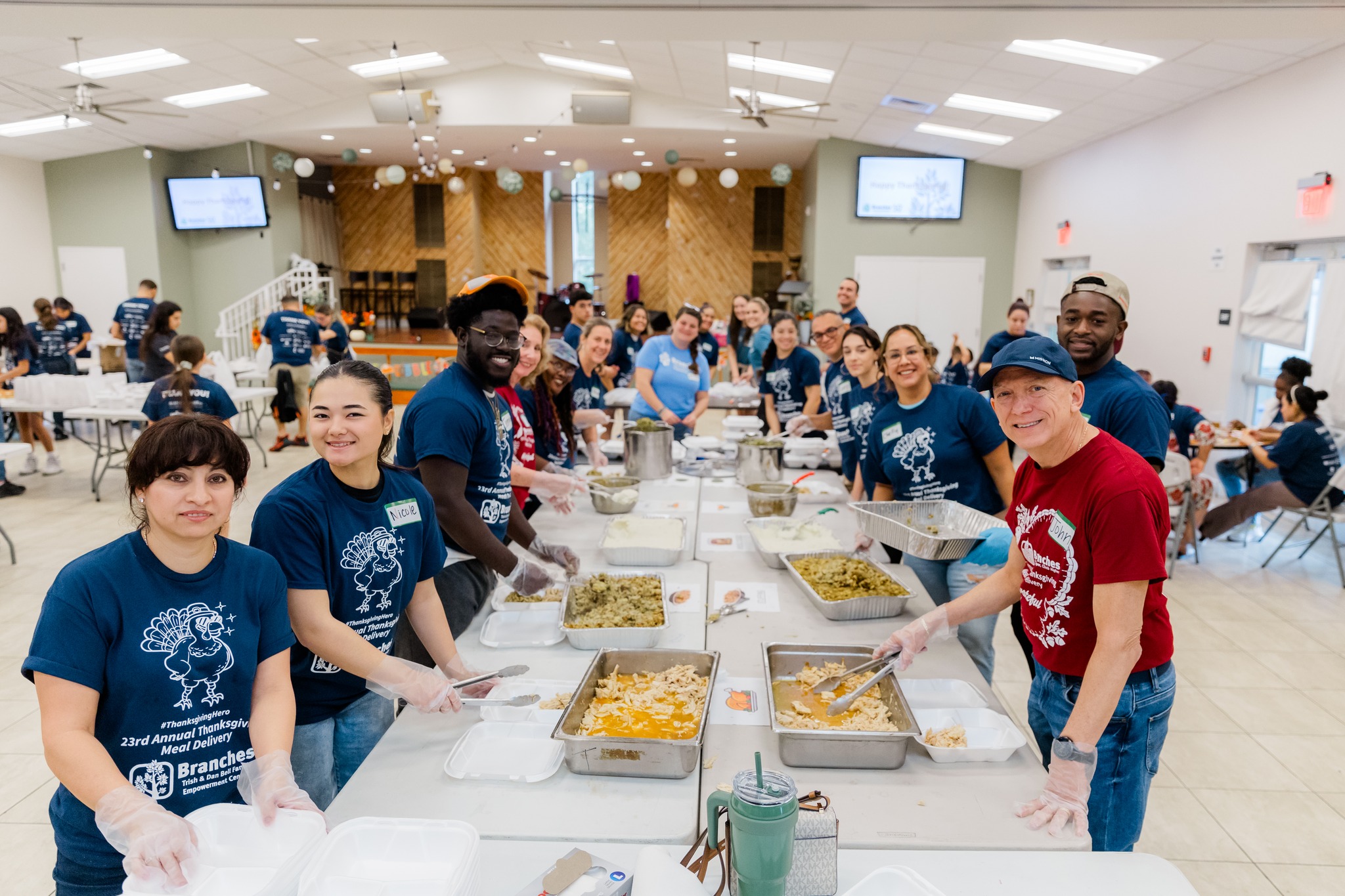 “We are continually grateful for the service-minded spirit of Aramark volunteers,” said Sarah Pattinson, associate director of development at Branches. “They come ready to serve the community and to tackle any project we present them with. They serve with joy and are always willing to go above and beyond for others.”
CSC ServiceWorks
Since 2021, Social Current has partnered with CSC ServiceWorks, the leading provider of laundry solutions and air vending services throughout the U.S., Canada, and Europe.
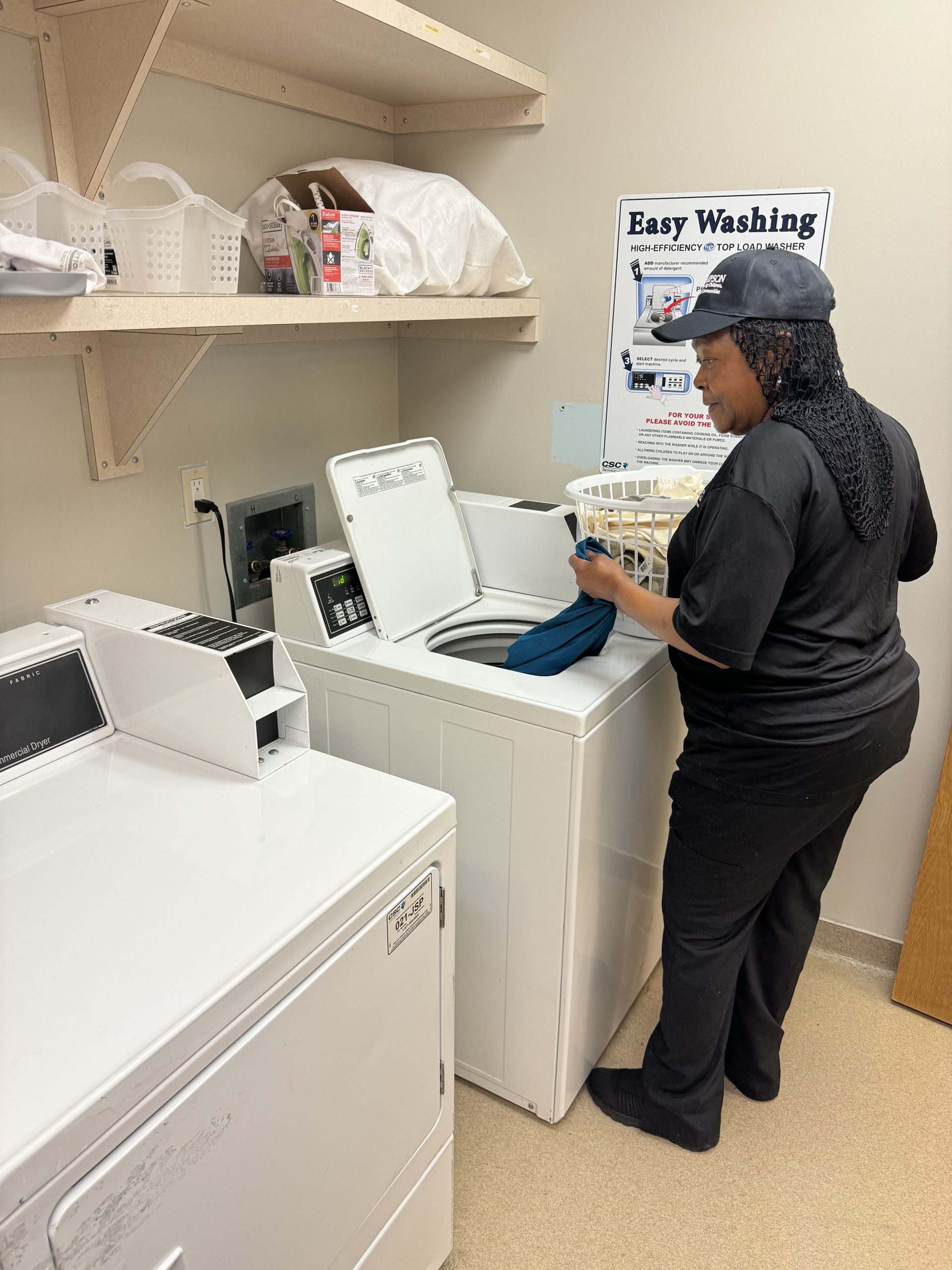 CSC CommunityWorks’ Signature Services program works with community organizations to provide reliable access to clean laundry and basic supports. They believe access to clean laundry is essential to helping people be successful in school and work as well as to maintain healthy lifestyles. CSC teams support their local community-based organizations by providing washer, dryer, air, and vacuum equipment; ongoing service for these machines; and volunteer support. Through their donations of washers, dryers, and ongoing equipment maintenance, CSC helps strengthen the capacity of Social Current partners who are providing essential services.
“The equipment [provided by CSC ServiceWorks] has allowed us to keep our laundry done in a timely fashion because our machines stay in operation,” said Danny Whitley, chief facilities officer at Thompson Child and Family Focus in Matthews, North Carolina. “We are 24/7 facility, and laundry is crucial to our care.”
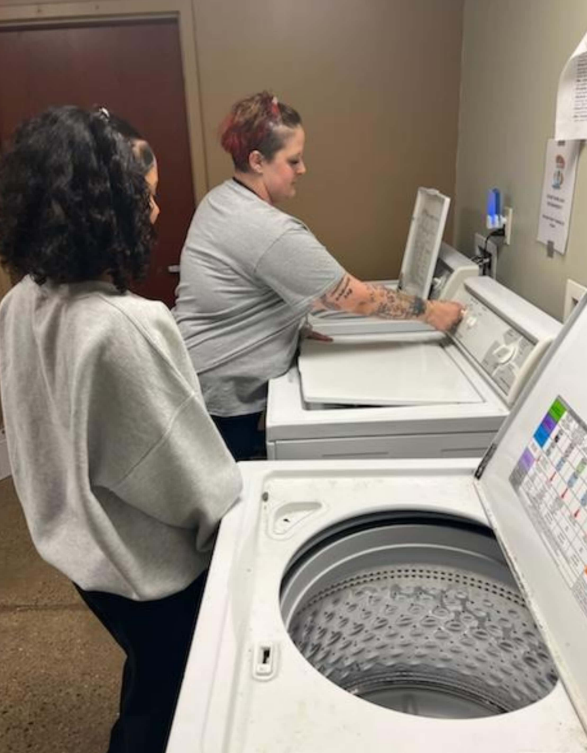 Rodney Prystash, director of facilities/operations at Auberle in McKeesport, Pennsylvania, shared, “The six high-quality washer and dryer units provided by CSC ServiceWorks have really helped meet the need for families residing at our homeless family shelters, and for the young women and men at our semi-independent living programs. The donated equipment and volunteer installations have allowed us to use resources for other critical items for those that we serve.”
Social Current celebrates and thanks all of its corporate volunteers, working in partnership with our network of organizations and helping us implement equitable solutions to society’s toughest challenges. For questions about Social Current’s corporate partnerships, please contact Emily Merritt, senior manager of corporate partnerships.
Lauri Goldkind, associate professor at Fordham University, will lead a session on artificial intelligence (AI) in human services at the upcoming CEO Convening, May 1-3 in Detroit. During the session, she’ll help participants assess opportunities and challenges related to using AI in human services organizations. This rapidly developing technology holds promising benefits for greater efficiency and effectiveness; however, it must be implemented strategically. Participants will be introduced to the three main applications of generative AI, learn how to conduct an organizational readiness assessment, and consider the elements of an organizational AI policy.
Goldkind’s research interests include data justice, AI and data ecosystems in nonprofit management, and telemental health and human rights. She has coauthored two articles for Social Current’s journal, Families in Society: The Journal of Contemporary Social Services. The journal offers peer-reviewed content that continually advances the social work profession.
“That’s the Beauty of It”: Practitioners Describe the Affordances of Direct-to-Consumer Tele-Mental Health
Lauri Goldkind and Lea Wolf
Published 2021, Vol. 102 (Issue 4)
This qualitative study uses the framework of affordances, derived from James Jerome Gibson, to examine what social work practitioners working on direct-to-consumer tele-mental health (DTCTMH) platforms are discovering about the features, benefits, and constraints of virtual therapy.
An interpretive phenomenological approach was employed to document the lived experiences of social workers who practice in this manner. According to the practitioners interviewed, for a subset of individuals seeking treatment, DTCTMH can offer meaningful interpersonal interaction that confers benefit. Key affordances include accessibility, anonymity, meaningful work, autonomy, lifelong learning, and access by new populations. Practitioners simultaneously acknowledge the ethical complexities and structural challenges of DTCTMH practice. The article concludes with suggestions for future research, policy, and practice.
Selling Your Soul on the Information Superhighway: Consenting to Services in Direct-to-Consumer Tele-Mental Health
Lauri Goldkind and Lea Wolf
Published 2020, Vol. 101 (Issue 1)
The practice of on-demand digital psychotherapy presents ethical questions, as new economic models, service delivery systems, and therapeutic models are introduced. Virtual therapy, now offered on a subscription basis by third-party providers, requires users to accept terms of service (ToS) agreements.
This article describes the results of a survey in which participants (n = 579) were asked to compare the values of the Human Rights framework with the language of one tele-mental health platform’s ToS user agreement. Findings suggest that those clients with prior experience with a mental health professional will find the ToS agreements to be the most ethically compromised. Similarly, individuals who are employed and have attained a higher level of education also found the ToS to be ethically suspect. Of those who were surveyed, individuals who hold less education and those who are unemployed, may be at most risk for signing consent to a system they do not understand. The study provides one example of the ethical questions that emerge from the introduction of a new model of for-profit service provision in mental health. Recommendations for consumers and practitioners are suggested.
How to Gain Access to Social Work Research
Social Current’s Knowledge and Insights Center offers the research and resources human services professionals need to stay current on emerging trends, implement practices, and advance organizational excellence. One feature of the Knowledge and Insights Center is the complete collection of Families in Society journal content, dating back to 1920.
In addition, users have access to an extensive resource library with thousands of catalog records in more than 20 topic collections, EBSCOhost, and customized research requests with knowledgeable librarians.
The Knowledge and Insights Center is one of the many benefits of being a Social Current Impact Partner. Other benefits include convenings and networking opportunities, complimentary participation in our workforce resilience virtual learning series, and special cost savings on solutions from Social Current and our Strategic Industry Partners.
Organizations may also purchase access to the Knowledge and Insights Center.