
The Biden-Harris Administration is taking significant steps to bolster public health by addressing social determinants through a collaborative effort across multiple agencies. The U.S. Department of Health and Human Services (HHS), particularly the Centers for Medicare & Medicaid Services (CMS), is unveiling vital resources to streamline the coordination of health care, public health, and social services at the federal, state, and local levels.
The effort includes the introduction of the inaugural U.S. Playbook to Address Social Determinants of Health, underscoring the interdependence of health, secure housing, nutritious food, and unpolluted air. HHS Secretary Xavier Becerra said, “It is clear that the health of our people does not exist in a vacuum, but it is affected by our access to stable housing, healthy food, and clean air to breathe.”
Additionally, the administration is launching a Call to Action to Address Health Related Social Needs as well as a Medicaid and CHIP Health-Related Social Needs Framework. These resources offer guidance to states in structuring programs that tackle housing and nutritional deficiencies for vulnerable populations. The guidance advocates for collaborative efforts across sectors, engaging private health care, social services, public health, environmental agencies, government, and information technology, to cultivate a more integrated health and social care system.
This all-encompassing strategy aligns investments across diverse federal agencies, including the departments of Health and Human Services (HHS), Agriculture (USDA), Housing and Urban Development (HUD), Veterans Affairs (VA), the Environmental Protection Agency (EPA), and others, to fund local initiatives, empower communities, and enhance health outcomes. Rooted in the White House Challenge to End Hunger and Build Healthy Communities, this initiative aligns with the Biden-Harris Administration’s National Strategy on Hunger, Nutrition, and Health. The overarching objective is to establish fair, accessible, person-centered health and social care systems, irrespective of social circumstances, reinforcing the administration’s dedication to health equity and comprehensive well-being.
HHS Announces New Funding for Community Behavioral Health
As part of the Biden-Harris Administration’s commitment to address behavioral health challenges at the community level, the U.S. Department of Health and Human Services (HHS) and the Substance Abuse and Mental Health Services Administration (SAMHSA) have unveiled funding opportunities totaling $74.4 million. These grants are designed to proactively prevent substance use, addressing associated concerns in line with the administration’s efforts to combat the overdose epidemic and tackle the national mental health crisis.
In related remarks, Secretary Xavier Becerra of HHS underscored the promotion of positive outcomes and the advancement of health equity through the support of community-based behavioral health services. SAMHSA, led by Miriam E. Delphin-Rittmon, is dedicated to enhancing access to behavioral health care services nationwide. The funding empowers organizations to implement evidence-based strategies aimed at preventing and addressing substance misuse while also promoting mental health.
The announced funding opportunities include $30.4 million in grants for the Expansion and Sustainability of the Comprehensive Community Mental Health Services for Children with Serious Emotional Disturbances (CMHI) program. This initiative targets the enhancement of mental health outcomes for children and youth at risk of serious emotional trauma. Additionally, $13.1 million is earmarked for Tribal Behavioral Health to counteract suicidal behavior, substance use/misuse, overdose, and trauma among American Indian/Alaska Native youth. Two grants, $15.5 million each, are directed at state and community entities to mitigate substance misuse onset and progression by prioritizing prevention and mental health promotion services. This initiative aligns with the administration’s comprehensive mental health strategy and the National Drug Control Strategy, contributing to a holistic, whole-of-government approach to addressing the overdose epidemic and mental health crisis.
HUD Rolls Out Grants for Youth Experiencing Homelessness
The U.S. Department of Housing and Urban Development (HUD) introduced a comprehensive strategy to tackle homelessness, with a specific focus on youth, individuals in unsheltered environments, and those in rural areas. HUD has designated $50 million for Youth Homelessness System Improvement (YHSI) grants, which will benefit around 35 communities. The grants seek to bring about systemic changes that improve response systems for youth at risk or experiencing homelessness. Objectives include enhancing impact through Youth Action Boards, setting up regional committees to address youth homelessness across various systems, gathering and utilizing data on at-risk youth, nurturing community leaders, and refining coordination of homeless assistance projects.
According to HUD Secretary Marcia L. Fudge, “The Biden-Harris Administration is taking a whole-of-government approach toward ending homelessness. We encourage our state and local partners to join us in this critical effort and leverage unprecedented levels of federal resources and flexibilities available to address this crisis.” In addition to the YHSI grants, HUD is implementing a technical assistance strategy for 62 Continuum of Care communities and 139 Public Housing Authorities (PHAs). This strategy aims to improve program coordination, elevate leaders with lived experience, engage individuals in unsheltered and rural settings, and make permanent housing a reality with supportive services.
Family First Prevention Services Clearinghouse Posts New Ratings
The Family First Prevention Clearinghouse has posted new ratings for twelve prevention services. One was found to be “well-supported,” one was rated as “supported”, one as “promising”, and nine were rated as “does not currently meet criteria.” The programs included mental health, substance abuse, kinship navigator, and in-home parent skill-based services. So far, 160 programs and services have been reviewed, and 79 have been rated as promising, supported, or well-supported. The new ratings are:
- Autism Parent Navigators: “Does not currently meet criteria”
- Celebrating Families!™: “Does not currently meet criteria”
- Celebrating Families!™ 0 Thru 3 Years: “Does not currently meet criteria”
- e-Family Foundations: “Does not currently meet criteria”
- Family Foundations: “Well-supported”
- FF@Home: “Does not currently meet criteria”
- Maternal Early Childhood Sustained Home-visiting®: “Supported”
- Parent-Child Assistance Program: “Does not currently meet criteria”
- Parent-Child Care: “Promising”
- Strong Foundations: “Does not currently meet criteria”
- Wellbriety & Celebrating Families!™: “Does not currently meet criteria”
- Washington State Kinship Navigator Program: “Does not currently meet criteria”
Subscribe to the Policy and Advocacy Radar to receive our biweekly policy roundup, which includes commentary on issues in Social Current’s federal policy agenda, opportunities to take action, and curated news and opportunities.
Help Shape the Next Edition of COA Accreditation Standards
COA Accreditation, a service of Social Current, is proposing enhancements to its accreditation standards. These draft revisions are now available for review and comment from the field.
- The Domestic Violence (DV) standards, have been updated to reflect current literature and practice to ensure they support survivor empowerment, respond to the different types of abuse survivors may have experienced, and address the range of services that enable survivors to heal, access resources, develop connections, and build skills.
Download the document of proposed changes. - The Services for Intellectual and Developmental Disabilities (IDDS) standards have been revised to better address key topics in the field including personnel competency, the inclusion of workers with lived experience on the team, caregiver/family support, and the delivery of individualized, therapeutic interventions to address symptoms that inhibit positive functioning and quality of life.
Download the document of proposed changes. - The Crisis Response and Information Services (CRI) standards have been expanded to better reflect the full spectrum of crisis services including additional standards for crisis text services, mobile response, peer support staff, and short-term crisis receiving and stabilization units that were all previously accredited under Residential Treatment Services (RTX). The updated standards also include new or expanded content on law enforcement involvement; collaborative crisis response systems; and trauma-informed, culturally-responsive, and person-centered care.
Download the document of proposed changes. - The Wilderness and Adventure-Based Therapeutic Outdoor Services (WT) standards have been expanded to include WT services for adult populations and include new content on safety and well-being for persons served and personnel in the field. The updated standards also include new content on trauma-informed, culturally responsive, and person-centered care.
Download the document of proposed changes.
Click on the links above to save the Word documents to your computer’s Downloads folder. Review the documents and submit your feedback through the process outlined at the top of each document. The deadline to make comments is Dec. 14.
These proposed updates reflect an in-depth review and synthesis of prominent published research and professional literature, as well as collaboration with a diverse group of subject matter experts from this field. The field comment period is a critical step in our process because it ensures our standards are field informed by including input from provider organizations in the development process. The final updates will be released in spring 2024.
This critical pairing of research and practice ensures that the COA Accreditation standards remain rigorous, practical, and reflective of current trends and evolving practices and continue to promote improved outcomes for individuals, families, and communities.
The National Council for Mental Wellbeing recently released a new vision paper for community-based provider organizations and states working to leverage the Certified Community Behavioral Health Clinic (CCBHC) model to expand access to high-quality care.
CCBHCs: A Vision for the Future of Community Behavioral Health Care outlines a national vision for excellence in community mental health and substance use care and describes how clinics can leverage their CCBHC status to transform the experience of accessing care.
“We must take steps today to improve the quality of health care that will strengthen communities, help people in need, and improve health outcomes – tomorrow is too late,” National Council for Mental Wellbeing president and CEO Chuck Ingoglia said. “The overwhelming need for mental health and substance use care demands that we embrace innovative ways of structuring, as well as delivering and paying for care. The CCBHC model represents the best solution to accomplish that goal.”
The new resource captures innovations and best practices being used by CCBHCs that improve health outcomes, facilitate access to care, and demonstrate the value of the model. For clinics, it provides ideas to help design programs and services, streamline operations to ensure same-day access and develop a workforce capable of meeting increased demand for services, promoting health equity and improving health care outcomes. For states, it includes recommendations to engage with CCBHCs to better inform policy solutions to reduce barriers to care and coordinate statewide efforts like implementing the 988 Suicide and Crisis Lifeline.
Operated and certified in 12 states, CCBHCs have seen widespread bipartisan support in the last decade. Just last year, the CCBHC demonstration program was expanded to add 10 new states every two years, starting in 2024. As the program expands and more states begin drafting their state certification processes many will require accreditation.
Through COA Accreditation, a service of Social Current, we can ensure CCBHCs meet that accreditation requirement and successfully implement and build upon SAMHSA’s 2023 CCBHC Certification Criteria.
Learn more about how COA Accreditation standards support best practices for CCBHCs by visiting our website or joining an upcoming webinar.
Visit the National Council’s website to download the vision paper.
Social Current and the American Public Human Services Association (APHSA) are excited to share progress on our effort to create a leadership framework for community-based and public sector human services leaders that will change the way we work together.
There is a need for a new operating paradigm that puts people at the center of the work, unlocking the power of community-led solutions. A change in how sector leaders work is foundational to advancing equitable, community-led outcomes.
Through focus groups, story gathering, a literature review, and the leadership experiences of both Social Current and APHSA, we have collected and synthesized a rich set of insights and impactful practices. From this collective input, we have been able to map the next generation of leadership competencies for human service leaders. By working from the traditional competencies that we seek to shift or amplify, we began to define/describe leadership competencies that are centered in people, community, and help make them actionable through specific examples.
We invite you and your community members with lived experience to participate in a virtual focus group in November or December. The sessions start Nov. 16. You can sign up here.
Initiative Update and Focus Groups for CEOs and Senior Leaders
Please join us to continue the dialogue. The focus groups will be 60 minutes long. During the session, facilitators will share an overview of the work and how the leadership competencies emerged. For the remainder of the session, participants will discuss how the competencies resonate with them; share their experiences, strategies, and innovations working in the human services sector; and identify how opportunities for improving services can be incorporated in the leadership behaviors or action.
View full details for CEOs and senior leaders and register here. Use this flier to share this opportunity with your team.
Focus Groups Community Members with Lived Experience
Please invite individuals in your communities to participate in these focus groups. We look to hear their perspectives around what makes them feel valued and heard, how to co-create practices and policies, how to improve service access, and how to address racial disparities. We will provide a stipend to individuals participating in these focus groups.
View full details for community members and register here. Use this flier to share this opportunity with your community.
Space is limited, so please register in advance. Only those who have registered in advance and received confirmation can attend.
If you have questions or need further details, contact Trinka Landry-Bourne of APHSA or Robena Spangler of Social Current.
By: Susana Mariscal and Bryan Victor
One of the most challenging and complex responsibilities of the child welfare system is understanding and investigating the death of a child. As difficult as they are, these investigations are an essential part of a public health process that helps explain why child deaths occur and the strategies that can prevent future deaths.
Child Fatality Review (CFR) teams are assigned the hard task of reviewing all deaths of children under the age of 18 that are sudden, unexpected, or unexplained, including children known to child protective services, and deaths that are determined to be the result of homicide, suicide, accident, or are undetermined. While many local CFR teams are comprised of individuals who are committed to protecting children and families in their local communities, for some states, including Indiana, CFR teams are volunteer positions and members are not compensated for their participation.
When the Indiana Department of Health (IDOH) was selected in 2019 by the Department of Justice Office for Victims of Crime as one of five sites in the nation to participate in a demonstration initiative to apply a public health approach to reducing child abuse and neglect fatalities and injuries, a focal area was the CFR process. The initiative, known as Child Safety Forward, gave us the opportunity to apply support from a national technical assistance team to our long-term aim of ensuring that processes, such as fatality review, are used consistently and effectively to generate data-informed recommendations to support prevention.
For the first phase of Child Safety Forward Indiana, CFR teams undertook a five-year retrospective review of data corresponding to child deaths in four counties that experienced the highest number of child fatalities in the state, along comparison counties. We also conducted interviews with parents and child-serving professionals involved with CFR, such as child welfare, public health, education, mental health, criminal justice, and others to learn about barriers and facilitators related to identification and prevention. The findings were significant, both in what they revealed about causes of child death, and in what they revealed about gaps in the system.
One of the findings identified inconsistencies around the implementation and operation of CFR teams around the state. For instance, instead of focusing on determining factors that could help identify prevention strategies, local review teams were often oriented toward assigning responsibility for death in individual cases—which reinforced the notion that CFR is a punitive process. To improve policy, IDOH developed data-driven recommendations that informed two state legislative changes. The first proposed policy change was to eliminate restrictions on who could initiate a CFR team, opening the door to a broader set of practitioners and community members to take the lead. The second proposed policy change was to mandate certain types of evidence and data to be collected during a death scene investigation in Sudden Unexpected Infant Death (SUID) cases–often related to unsafe sleep conditions.
Since the passage of these bills, the Child Safety Forward Indiana team has continued to implement several other changes that strengthened the CFR infrastructure across the state. The biggest change is the increase in the number of CFR teams, which for the first time in the history of the program, now cover all 92 counties in the state. The Department of Child Services (DCS) has taken on the responsibility of initiating teams in many of these areas. With this rapid expansion, training and resources for teams were needed, and Child Safety Forward Indiana has created a hub and toolkit for this purpose, along with coordinators to provide support at the regional level.
Over the course of the initiative, the improvement in the quality of the CFR process was one aspect of a multi-dimensional effort, including multidisciplinary team training. The team also worked to improve cross-system collaboration in partnership with Strengthening Indiana Families (SIF), a primary child maltreatment project that is implementing Family Resource Centers in central Indiana to provide support and build on families’ protective factors through community collaboration. SIF also convened a Parent Advisory Group to emphasize the voices and representation of parents in shaping prevention programs, advancing racial equity and inclusion, and improving children and family outcomes.
Community Action Teams, consisting of a group of stakeholders, were established to implement CFR team recommendations. IDOH also developed and launched a data-informed statewide infant safe sleep campaign, including videos which have garnered over 1.5 million views.
While no direct causal inferences can be made, all of these and other prevention efforts have had a meaningful collective impact in the four target counties, which has seen decreases in SUID rates and in the rates of child fatalities due to external injury.
These efforts demonstrate that, while difficult, the work of those who conduct child fatality reviews are a vital and necessary tool in a public health approach that is geared toward providing the resources and knowledge that can prevent future tragedies, so that all children fulfill their promise.
______________________
Susana Mariscal is an associate professor at the Indiana University School of Social Work. She is the lead evaluator of Child Safety Forward Indiana and project director of Strengthening Indiana Families, a strengths-based primary child maltreatment prevention program funded by the U.S. Children’s Bureau. Mariscal is a community-engaged scholar focused on violence prevention and resilience promotion among children and families.
Bryan Victor is an assistant professor at Wayne State University School of Social Work. His research examines community-based approaches to violence prevention with a particular focus on child maltreatment. Victor is a co-investigator on the Child Safety Forward Indiana evaluation team and co-leads the Strengthening Indiana Families project with Dr. Susana Mariscal.
Disclaimer: This product was supported by cooperative agreement number 2019-V3-GX-K005, awarded by the Office for Victims of Crime, Office of Justice Programs, U.S. Department of Justice. The opinions, findings, and conclusions or recommendations expressed in this product are those of the contributors and do not necessarily represent the official position or policies of the U.S. Department of Justice.
By: Sheila Boxley
When the federal Commission to Eliminate Child Abuse and Neglect Fatalities released its groundbreaking report in 2018, one of the key concepts that informed its recommendations was the need for multi-disciplinary support for families. In other words, keeping children safe is a job that child welfare systems and child protective services (CPS) cannot do alone.
On the heels of the release of the Commission’s report, the U.S. Department of Justice funded a demonstration initiative to develop and test multidisciplinary strategies and responses to address fatalities or near-death injuries as a result of child abuse and neglect. Known as Child Safety Forward, the initiative has spent the subsequent four years developing strategies to support a public health approach to reducing abuse and neglect fatalities.
The Child Abuse Prevention Council of Sacramento (CAPC) was one of five demonstration sites in the nation chosen for this grant. Systems partners across Sacramento County began the work with an understanding that child safety and well-being was not solely a “child welfare responsibility,” and recognized the need for all child- and family-serving agencies and organizations to partner together. While collaboration across systems in Sacramento County was already strong, the initiative furthered a sense of shared responsibility and accountability for child safety to fully implement a public health approach to prevent child maltreatment through systems change.
Through the development of a Prevention Cabinet comprised of local system and community leaders, the Sacramento Child Safety Forward team leaned into the collective impact approach, which is often utilized to support and engage multi-disciplinary players to work together to solve complex problems.
What is collective impact? Practitioners define it as “a network of community members, organizations, and institutions that advance equity by learning together, aligning, and integrating their actions to achieve population and systems-level change.” It involves a structured process that integrates the following: a common agenda; shared measurement; mutually reinforcing activities; continuous communication; and a backbone team.
Engaging community and centering equity are essential elements to the success of collective impact. The Sacramento team approached the work by elevating families into relationships of equal power in the development of a strategic plan with the goal of aligning with community needs.
They achieved this by appointing Community Representatives to infuse the initiative with the stories, voices, and life experiences of those who have had contact with any child- and family- serving system or agency in Sacramento County. Seven community listening sessions, developed in partnership with the Community Representatives, provided additional community feedback.
Shifting the way people think and understand the connection between prevention and child safety takes time. It requires moving decision makers and practitioners from focusing on how to work within the constraints of their current system to envisioning a new way for the system to operate. There were core elements of the Child Safety Forward design that helped accelerate some of the necessary transformations. These included:
- Creation of an operational structure to prioritize and facilitate collaborative co-creation of the plan and implementation.
- Centering community voice to create shared power.
- Leveraging and integrating countywide collaborative efforts to reduce duplication of efforts.
- Use of an external evaluator as a neutral partner for technical assistance to inform strategic decision-making.
Child Safety Forward enabled Sacramento County to create a robust governing structure through its Prevention Cabinet for this work. This entity now consists of more than 30 cross-systems leaders from public systems, private nonprofits, and the community who have come together to co-create a strategic plan focused on systems change that promotes positive outcomes for children and families.
The demonstration initiative has afforded Sacramento County the opportunity to participate in peer-to-peer learning and connect with subject-matter experts to support planning and implementation of a cross-systems strategic plan using a public health 21st century child welfare system approach. This has included the development of strategic ten-year plan to eliminate child abuse and neglect fatalities by 2030 that the team will be presenting to the Sacramento County Board of Supervisors.
Child Safety Forward Sacramento’s Prevention Cabinet has become the advisory body and collaborative partner for other child safety initiatives in the county. Because the Prevention Cabinet has such a widespread reach across county agencies and organizations, the Prevention Cabinet has been selected as the governing body of the county’s efforts to implement the Family First Sacramento Comprehensive Prevention Plan.
This approach to collective impact is uniting cross-sector and community leaders under a common cause and will ultimately help leaders engage and collaborate across systems that touch families with a common goal and collective responsibility for keeping children safe.
___________________
Sheila Boxley is the President & CEO of the Child Abuse Prevention Center, a local and state organization which provides services, training, research, and advocacy and serves as the association for the 500 family resource centers in California.
Disclaimer: This product was supported by cooperative agreement number 2019-V3-GX-K005, awarded by the Office for Victims of Crime, Office of Justice Programs, U.S. Department of Justice. The opinions, findings, and conclusions or recommendations expressed in this product are those of the contributors and do not necessarily represent the official position or policies of the U.S. Department of Justice.
The Streamlining Federal Grants Act was recently introduced in the Senate and House (S. 2286/H.R. 5934) and seeks to improve the effectiveness and performance of federal grants and cooperative agreements, simplify application and reporting requirements, and facilitate greater coordination among federal agencies responsible for delivering services to the public. Notable for nonprofits, the bill promotes consultation with charitable organizations and governments and calls for improving services delivered to communities and organizations that historically have been unable to access federal grants or cooperative agreements.
Read the nonprofit coalition letter in support of the Streamlining Federal Grants Act. The due date to sign on has now passed. We still encourage you to take action and reach out to your members of Congress today.
Budget Proposals Still Lack Necessary Funds for WIC
As the Nov. 17 deadline nears, lawmakers are still negotiating the federal budget, with many expecting another continuing resolution that will fund the government temporarily while compromises are hashed out. According to the Center on Budget and Policy Priorities, the current proposals under consideration in both the House and Senate fall significantly below the necessary funding levels for the Special Supplemental Nutrition Program for Women, Infants, and Children (WIC). WIC stands as a remarkably effective program, providing nutrition aid, educational resources, and assistance to families with limited incomes. Absent supplementary funding, an estimated 600,000 eligible new parents and young children may be denied access to WIC, potentially resulting in waitlists and decreased enrollment. This funding shortfall could also dissuade eligible families from seeking program benefits.
Insufficient funding for WIC would mark an extraordinary situation, predominantly impacting recent parents, young children, and preschoolers, potentially resulting in heightened food insecurity and enduring health ramifications. The Senate bill allocates $6.3 billion for WIC, but this sum falls short due to the increasing levels of participation and rising food costs. Estimates suggest that Congress must allocate a total of $7.1 billion for WIC in 2024 to ensure that every eligible family can access the complete benefit. Congress is strongly encouraged to honor its commitment and supply the requisite funding for WIC as the appropriations process unfolds.
Youth Prevention and Recovery Reauthorization Act Introduced
On Oct. 18, Senators Shelley Moore Capito (R-W.Va.) and Gary Peters (D-Mich.) introduced the bipartisan Youth Prevention and Recovery Reauthorization Act to reauthorize funding for the Youth Prevention and Recovery Initiative. This initiative was established as part of the 2018 SUPPORT Act, focusing on expanding access to opioid addiction treatment for adolescents. It aims to secure ongoing funding for this critical resource within the U.S. Department of Health and Human Services, benefiting youth, families, care providers, and communities.
The backdrop for this legislation is a troubling rise in opioid use among American adolescents, with over 695,000 using opioids for nonmedical purposes in 2018, marking a substantial increase since 2015. Additionally, during the initial two years of the COVID-19 pandemic, monthly drug overdose deaths among adolescents aged 10 to 19 nearly tripled, according to the CDC. The legislation aims to address these difficulties by allocating funds to broaden the availability of medications for treating opioid addiction among adolescents and young adults. It also intends to raise awareness of the hazards linked to opioids and provide training to healthcare professionals, families, and school staff in effective strategies to support adolescents dealing with opioid use disorders.
New Funding for Community Development Projects
On Oct. 10, the U.S. Department of Health and Human Services (HHS) announced the allocation of $16.7 million in new grants to support 39 Community Economic Development (CED) projects. The CED initiative aims to broaden the scope of employment prospects in regions grappling with long-standing poverty and elevated joblessness, all while eradicating hindrances to secure employment. These grants empower beneficiaries to furnish crucial supports, such as childcare, transportation, and financial education.
These grants aim to create over 575 new, sustainable full-time jobs for individuals residing in low-income communities across 26 states. Three-quarters of the job opportunities originating from each CED grant will be set aside for individuals with low incomes, and awardees will provide assistance services to tackle the employment obstacles faced by this group.
Notably, many of the awarded grants align with the Justice40 Initiative, benefitting disadvantaged communities and furthering the goal of fostering sustainable economies in areas that need it most. The CED initiative is managed by the Administration for Children and Families’ Office of Community Services, which administers multiple anti-poverty programs to address poverty’s root causes, enhance economic security, and revitalize communities.
HHS and HUD Tackle Housing and Homelessness Together
On Nov. 1, Secretary Xavier Becerra was named the chair of the U.S. Interagency Council on Homelessness (USICH), which coordinates the federal homelessness strategy, supporting state and local efforts to address homelessness. To combat homelessness and enhance housing accessibility, the U.S. Department of Health and Human Services (HHS) announced several initiatives, including nine new grants worth $2.1 million to strengthen wrap around services for families living in affordable housing and 11 grants totaling nearly $4 million for preventing youth homelessness.
Furthermore, HHS and the U.S. Department of Housing and Urban Development (HUD) have launched the Housing and Services Partnership Accelerator (Accelerator). This initiative aids states in enhancing pioneering housing-related assistance and services for individuals with disabilities and older adults facing homelessness risks. The Accelerator assembles cross-disciplinary teams from four states to confront shared challenges and enhance cooperation and coordination. Its primary objectives are to optimize resource utilization, harmonize policies, and provide comprehensive services.
Subscribe to the Policy and Advocacy Radar to receive our biweekly policy roundup, which includes commentary on issues in Social Current’s federal policy agenda, opportunities to take action, and curated news and opportunities.
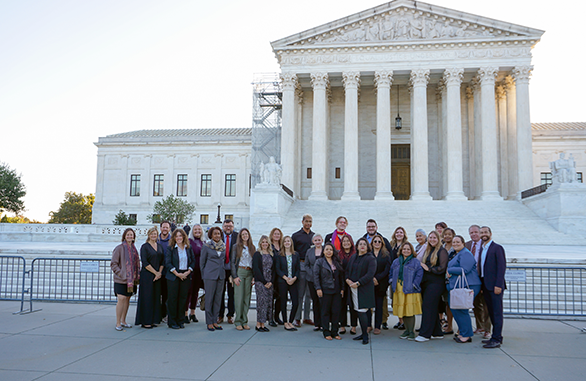
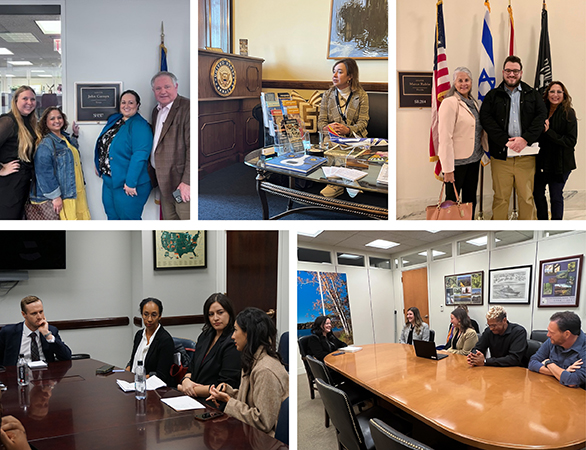
Last Wednesday, Social Current held its first-ever Hill Day in Washington, D.C., as part of our larger SPARK 2023 conference. During this event, 40 participants from dozens of our network organizations participated in over 50 meetings with members of Congress and staff to build support for the bipartisan Streamlining Federal Grants Act. Each of our advocates crisscrossed Capitol Hill throughout the day, speaking with numerous offices on both sides of the aisle about the necessity to pass this crucial legislation, which would simplify the grant application process so that all nonprofits, large and small, can access federal grants.
Based on initial reports from the participants, our delegation was received warmly with curiosity and growing support.
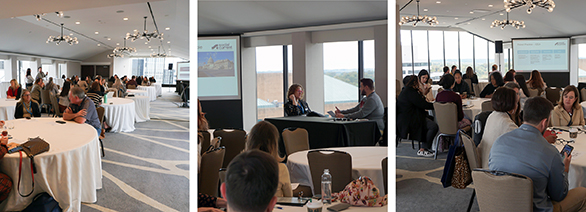
Prior to Hill Day, participants joined the Igniting Advocacy Training at SPARK 2023 to prepare for their conversations ahead. Led by Social Current’s Senior Director of Government Relations Blair Abelle-Kiser, the training covered the fundamentals of Congress, details on the Streamlining Federal Grants Act, and ways to effectively tell your organization’s story and build a compelling message. Participants left the trainings confident and prepared to advocate to their senators and representatives on behalf of their organizations and local communities.
All in all, the advocacy training and Hill Day was a success. Social Current plans to host future advocacy days in Washington, D.C., as we, in concert with our network, flex our advocacy muscles to amplify the power of the social sector!
And save the date for SPARK 2024, Oct. 21-22, in Denver, Colorado.
Subscribe to the Policy and Advocacy Radar to receive our biweekly policy roundup, which includes commentary on issues in Social Current’s federal policy agenda, opportunities to take action, and curated news and opportunities.
The Biden-Harris Administration has proposed significant changes to the Office of Management and Budget’s (OMB) Uniform Grants Guidance aiming to benefit nonprofit organizations, particularly addressing concerns related to indirect costs. These reforms are set to streamline service delivery, enhance equity, and improve the administration of federal financial assistance. Key provisions include bolstering federal reimbursement for nonprofits’ indirect costs, simplifying the federal grant process, and advancing equity.
Bolstering Federal Reimbursement for Nonprofits’ Indirect Costs
The proposed OMB Uniform Grants Guidance seeks to increase reimbursement rates for indirect costs carried by nonprofit organizations, currently set at ten percent. The new plan raises the de minimis rate to 15 percent, providing better recovery of indirect costs, especially for newer organizations without formal rate negotiation capabilities.
- De Minimis Rate Increase: The proposal aims to raise the guaranteed de minimis rate for indirect costs from ten percent to 15 percent, benefiting new or inexperienced nonprofits.
- No Forced Lower Rates: Federal agencies cannot compel nonprofits to use rates lower than 15 percent unless required by law, preserving organizations’ autonomy.
- Dispute Resolution: Nonprofits can notify OMB about disputes with federal agencies concerning indirect cost rates, seeking resolution and protection of their rights.
- Stronger Mandate: Pass-through entities like state and local governments must adhere to federally negotiated indirect cost rates for subrecipients, ensuring consistency across agencies.
Making the Federal Grant Process Simpler and More Equitable
The OMB Grant Guidance proposes several changes to simplify and make the federal financial assistance management process more transparent and equitable:
- Clear Communication: The proposal emphasizes clear and plain language in notices of funding opportunities, requiring executive summaries and comprehensive explanations of program requirements.
- Eligibility Clarity: Agencies must specify eligibility criteria for each funding opportunity, facilitating access for new organizations.
- Simplified Notices: Reforms aim to simplify and clarify Notices of Funding Opportunities, benefiting applicants with less experience and those from underserved communities.
Advancing Equity and Overcoming Barriers
The proposed revisions aim to reduce complexity and lower barriers for recipients of federal financial assistance, particularly those in underserved communities:
- Multilingual Approach: The exclusive use of English in notices, applications, and reporting would not be required.
- Diversity Consideration: Federal agencies should consider diversity when developing policies and procedures for merit review panels.
- Community Engagement: Encouragement for agencies and recipients to engage, in both the planning and implementation stages, with community members benefiting from federal assistance programs.
Additional Significant Reforms
In addition to the above, the proposed reforms include:
- Complete Revision of Notices of Funding Opportunities (NOFOs) for clarity and brevity.
- Raising the Single Audit Threshold from $750,000 to $1 million.
- Proposal to focus only on measuring relevant program performance metrics to eliminate unnecessary reporting.
These proposed reforms represent a significant shift towards a more accessible, equitable, and efficient federal grant process, mainly supporting nonprofit organizations and addressing longstanding concerns related to indirect costs. Public comments on these reforms are invited until Dec. 4, 2023, offering an opportunity for further input and refinement.
Resources
- Dollars Delivering Results: Biden-Harris Administration Publishes Proposed Updates to the Uniform Grants Guidance to Improve Impact of Federal Grants and Other Financial Assistance, White House News Release, Sept. 22, 2023.
- Guidance for Grants and Agreements, published in the Federal Register, Oct. 5, 2023.
HHS Announces Major Step Forward for Kinship Caregivers
The Department of Health and Human Services released a new rule to help relatives become licensed or approved foster caregivers. Research has clearly demonstrated children are served better by living with kinship caregivers. Kinship families, however, have faced unnecessary barriers to becoming licensed, including requirements to participate in trainings that are geared toward non-relative foster parents. Under the new rule, grandparents, aunts, uncles, and other kin will have more expedient access to licensing or approval. They will also receive services and foster care maintenance payments equal to other foster families. The rule includes provisions to address other unique aspects of kinship caregiving, such as raising the age limit for kinship foster care providers and allowing foster children to share sleeping spaces with kin. HHS has pledged to work closely with states, tribes, community-based organizations, and families as they integrate these new policies.
HHS Introduces New Initiatives on Maternal Health Day of Action
On Sept. 27, the Department of Health and Human Services (HHS) Maternal Health Day of Action, Secretary Xavier Becerra announced $103 million in awards to address gaps in maternal health across the nation, as well as a new task force on the issue and a new national public education campaign called “Talking Postpartum Depression.” To combat the maternal mortality crisis, the secretary said at the announcement ceremony, “HHS is taking action to improve maternal care, help new moms, and ensure their children have the healthiest start in life.” The Human Resources and Services Administration will disperse the vast majority of the funds to efforts such as expanding the perinatal workforce, increasing access to maternal health in underprivileged and rural communities, funding wrap around services like OB/GYNs and midwives, and developing maternal health research. A newly announced task force on maternal mental health will convene experts and those with lived experience to identify best practices and evidence-based interventions to improve health equity and incorporate trauma-informed practices. Finally, the “Talking Postpartum Depression” campaign will exhibit personal stories from women who have experienced postpartum depression and increase awareness of symptoms and resources.
The House of Representatives Loses Its Speaker
Last week, for the first time in the country’s history, the Speaker of the House, Kevin McCarthy (R-Calif.), was toppled, leaving the House of Representatives without a leader and the federal budget negotiations in turmoil. McCarthy joined with moderate Republicans and the Democrats the week before to pass a continuing resolution, which would fund the government at current levels for forty-five days, buying more time for Congress to negotiate the budget. This caused backlash from far-right members of the GOP caucus, led by Rep. Matt Gaetz (R-Fl.), who initiated a motion to vacate the Speakership, ultimately overthrowing McCarthy.
It is unclear where the House goes from here. The first step is for the GOP to elect a new Speaker. So far, two members, Reps. Jim Jordan (R-OH) and Steve Scalise (R-La.), have thrown their hats in the ring of what will undoubtedly be a tendentious fight for leadership. The new Speaker, whoever it may be, will have to steer a challenging negotiation in the House over the federal budget, with two issues taking center stage: border security and Ukraine aid.
Subscribe to the Policy and Advocacy Radar to receive our biweekly policy roundup, which includes commentary on issues in Social Current’s federal policy agenda, opportunities to take action, and curated news and opportunities.
Social Current has always emphasized that together, we can create a greater impact. By working across systems, community-based organizations can establish a web of services that maximize their strengths and address their needs to better serve their staff and communities.
At Social Current, we provide multiple pathways toward purposeful partnership. From Strategic Industry Partners to Network Champions to Corporations and Philanthropy, we bolster our network’s impact by sharing their business solutions and opportunities.
Our President and CEO Jody Levison-Johnson would like to introduce our Gold Strategic Industry Partners in this video. These four partners offer specialized products and services that benefit the sector:
Meet Social Current’s Gold Strategic Industry Partners
CCNY, Inc: There’s always a human side to analytics, and that’s where CCNY comes in. With consultative services that encompass data collection, evaluation, analytics, predictive modeling, and quality improvement, it’s their job to facilitate data-driven decisionmaking for those who work in health and human services.
DCM Associates (DCM): DCM’s nationally recognized and experienced leadership search consultants and coaches provide affordable expertise to help CEOs and leadership teams perform better as well as provide education, assessments, and surveys to help the entire organization, board, and leadership team develop best practices.
DCM offers a special executive search rate for Social Current’s COA-accredited organizations or Engagement Package holders year-round. They also invite you to participate in this nationwide CEO and Board Chair survey through Oct. 23.
Mutual of America Financial Group: Mutual of America offers a wide variety of pension and savings retirement plans for organizations of all sizes. They provide full services for 401(k), 403(b), Profit-Sharing, and 457 Deferred Comp plans and deliver the cost-efficiency of a full-service provider. Mutual of America can help you meet your investment, communication, and administrative responsibilities. No brokers, third-party administrators, firms, or individuals in the middle to drive up costs and delay plan-related services. They work directly with their clients.
Your Part-Time Controller (YPTC): For over 30 years, YPTC has helped to build stronger nonprofits. With over 1,400 nonprofit clients from coast to coast, YPTC assists with their financial management needs. These services include:
- Internal, grant, and board reporting
- Forecasting, budgeting, and cash flow management
- Bookkeeping and monthly financial statements
- Development of customized dashboards
Learn more about YPTC in this Partner Highlight.
Our Strategic Industry Partners support our annual SPARK Conference. Register today for SPARK 2023, Oct. 16-17 in Bethesda, Maryland.
Interested in partnering with Social Current? Contact Marisa Collins, director of strategic partnerships and partner communications, or visit our partnerships page online.